
Furnace vs Boiler in Bristol County, Massachusetts
When a furnace makes sense
If your house already has ductwork, a furnace is the straightforward choice. It runs off the same gas line a boiler would use, and with eight months of heating season and nights averaging 23°F, you want a system that can push warm air fast when the temperature drops. The ducts also let you add central air conditioning later without tearing into walls or floors.
When a boiler makes sense
If your home is already set up with radiators or in-floor pipes, a boiler makes sense to keep rather than rip out for ductwork you don't have. It runs about 5% cheaper to operate than a furnace at Massachusetts gas prices, which adds up over eight months of heating a year. The heat it puts out tends to feel steadier through those cold nights, since it's warming the room itself rather than blowing air through it.

Furnace
- Runs on
- Natural gas
- What it does
- Heats only
- Tax credit
- No federal tax credit since the end of 2025
Sources: U.S. Department of Energy · Internal Revenue Code
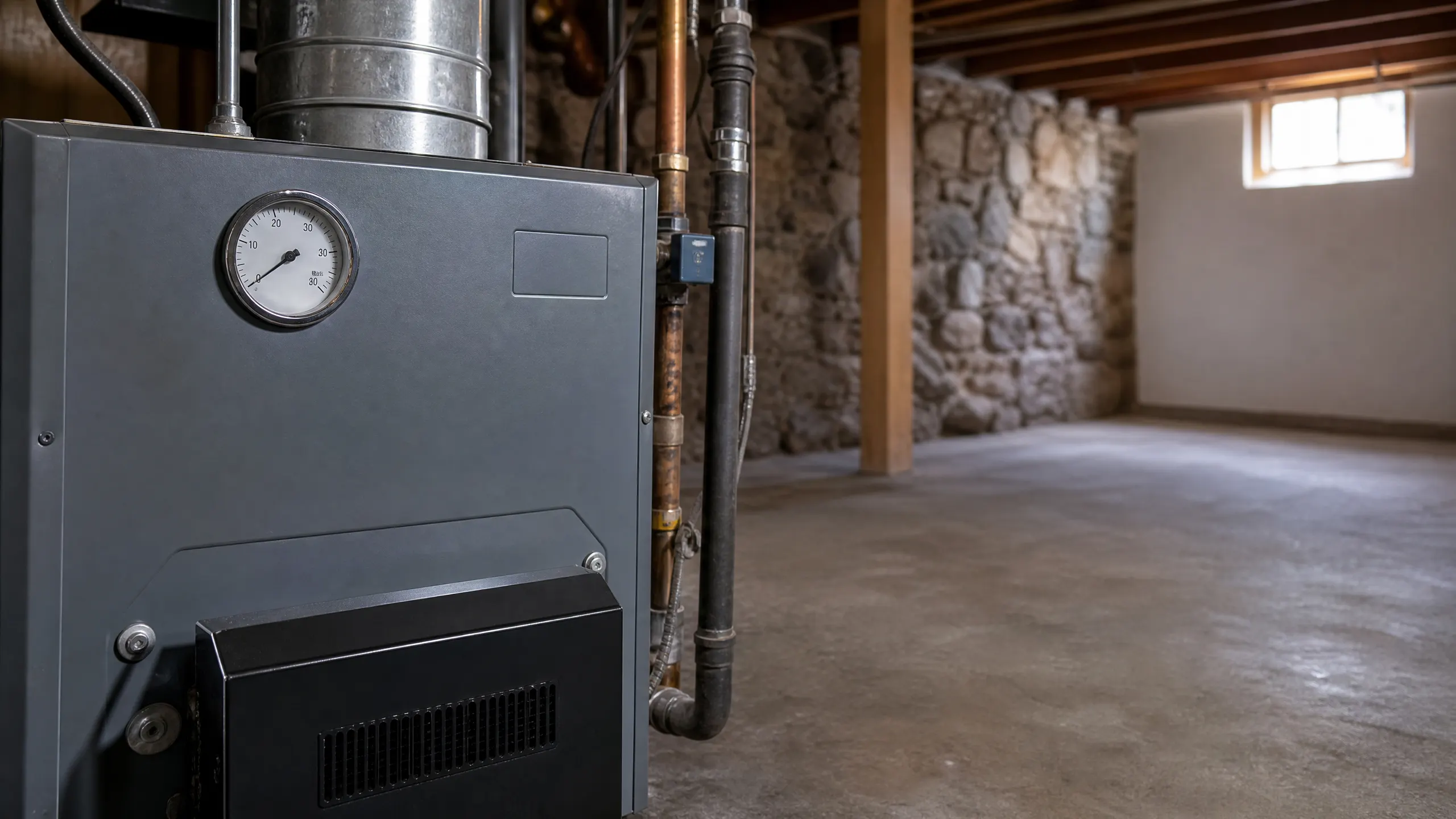
Boiler
- Runs on
- Natural gas
- What it does
- Heats only
- Tax credit
- No federal tax credit since the end of 2025
Sources: U.S. Department of Energy · Internal Revenue Code
Furnace wins in Bristol County.
In New England, 54.8% of homes heat with a furnace, so just over half already have the ductwork it needs.
If your home already runs on radiators or in-floor pipes, a boiler stays the better choice since there is no ductwork to replace it with.
Find a contractor| Compared on | Furnace | Boiler |
|---|---|---|
| Cost to run here | Costs more to run | About 5% less to run |
| What it does | Heats only | Heats only |
| Homes in New England that heat with one | 54.8% | 26.2% |
| Handles a 23°F night | Yes | Yes |
Sources: U.S. Energy Information Administration, U.S. Department of Energy, NOAA
When a furnace makes sense
If your house already has ductwork, a furnace is the straightforward choice. It runs off the same gas line a boiler would use, and with eight months of heating season and nights averaging 23°F, you want a system that can push warm air fast when the temperature drops. The ducts also let you add central air conditioning later without tearing into walls or floors.
When a boiler makes sense
If your home is already set up with radiators or in-floor pipes, a boiler makes sense to keep rather than rip out for ductwork you don't have. It runs about 5% cheaper to operate than a furnace at Massachusetts gas prices, which adds up over eight months of heating a year. The heat it puts out tends to feel steadier through those cold nights, since it's warming the room itself rather than blowing air through it.
A Bristol County contractor will price both against your own house, your ductwork and your panel.
Tell us about the job
It takes about a minute.