
Is duct cleaning worth it in Boston, MA

One request and the duct cleaning stops waiting on you.

Hand off the search

Is duct cleaning worth it in Boston?

You've seen the ads and the mailers about duct cleaning, and you're not sure if it's a real service or just an upsell. You keep your house in good shape and don't want to pay for something that does nothing. With Boston's cold winters and gas heat running the ducts hard for months, you want to know if there's an actual reason to do this, not just a sales pitch.

It depends on what's in your ducts, not on a schedule

Duct cleaning is worth it when there's a real reason for it: dust coming out of the vents, a musty smell when the furnace kicks on, or work done recently that left debris in the ductwork. It isn't something that needs doing on a fixed timeline just because the seasons change. Gas furnaces here push air through those ducts all winter, and that airflow carries along whatever has settled inside. If nobody in the house has allergies acting up and you don't see dust collecting near the vents, cleaning won't change much. If you do notice those signs, it's worth having someone look at the actual condition of the ducts before deciding.

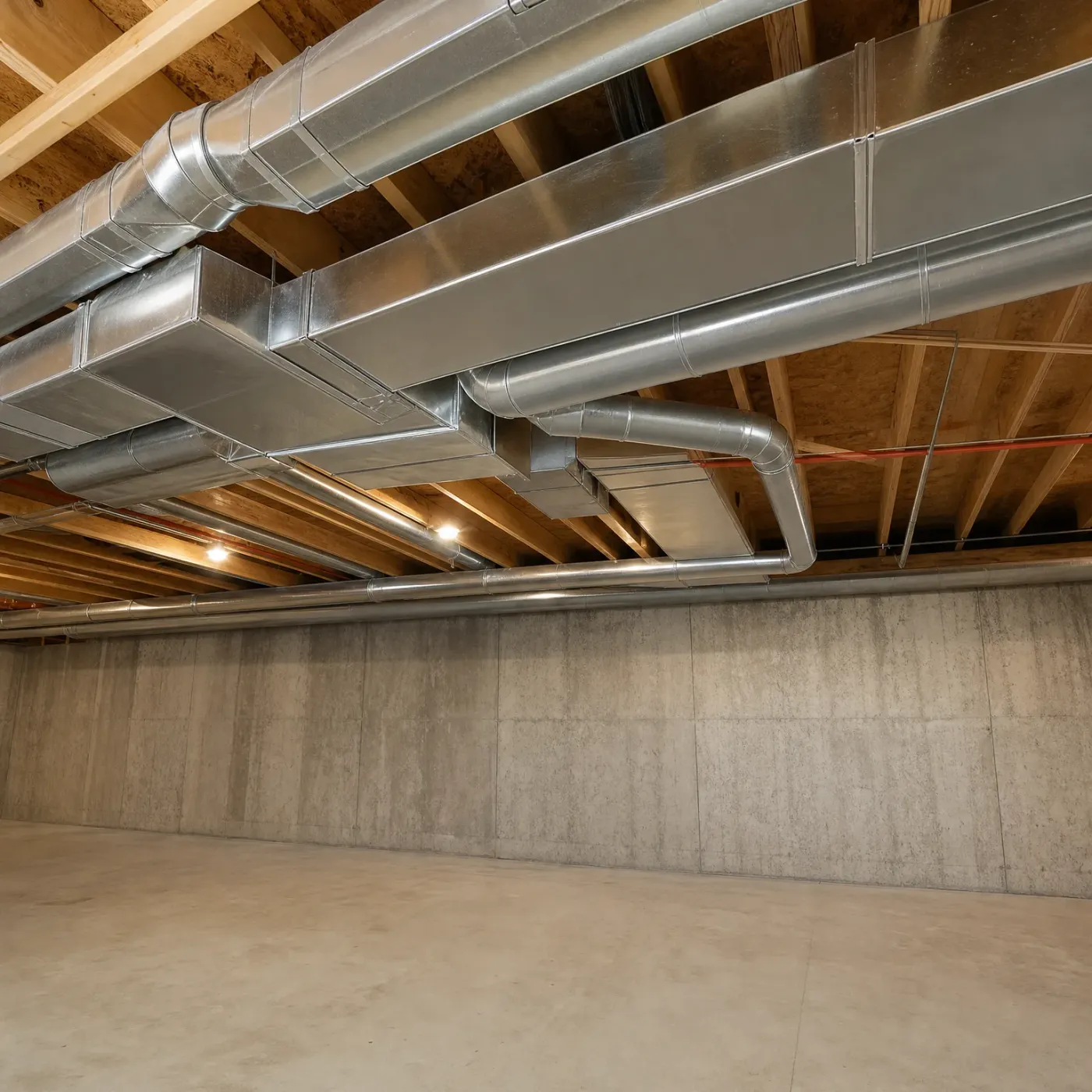
Unfinished basement with bare concrete walls and floor, exposed wood joists, and large sheet-metal HVAC ducts and pipes running along the ceiling.

Ducts that are doing fine

This is what most basements look like. The metal ductwork runs clean across the joists, the furnace sits quiet in the corner, and air moves through without resistance. No dust rings at the vents, no musty smell when the blower kicks on. If this is your setup, cleaning won't change anything you'd notice.
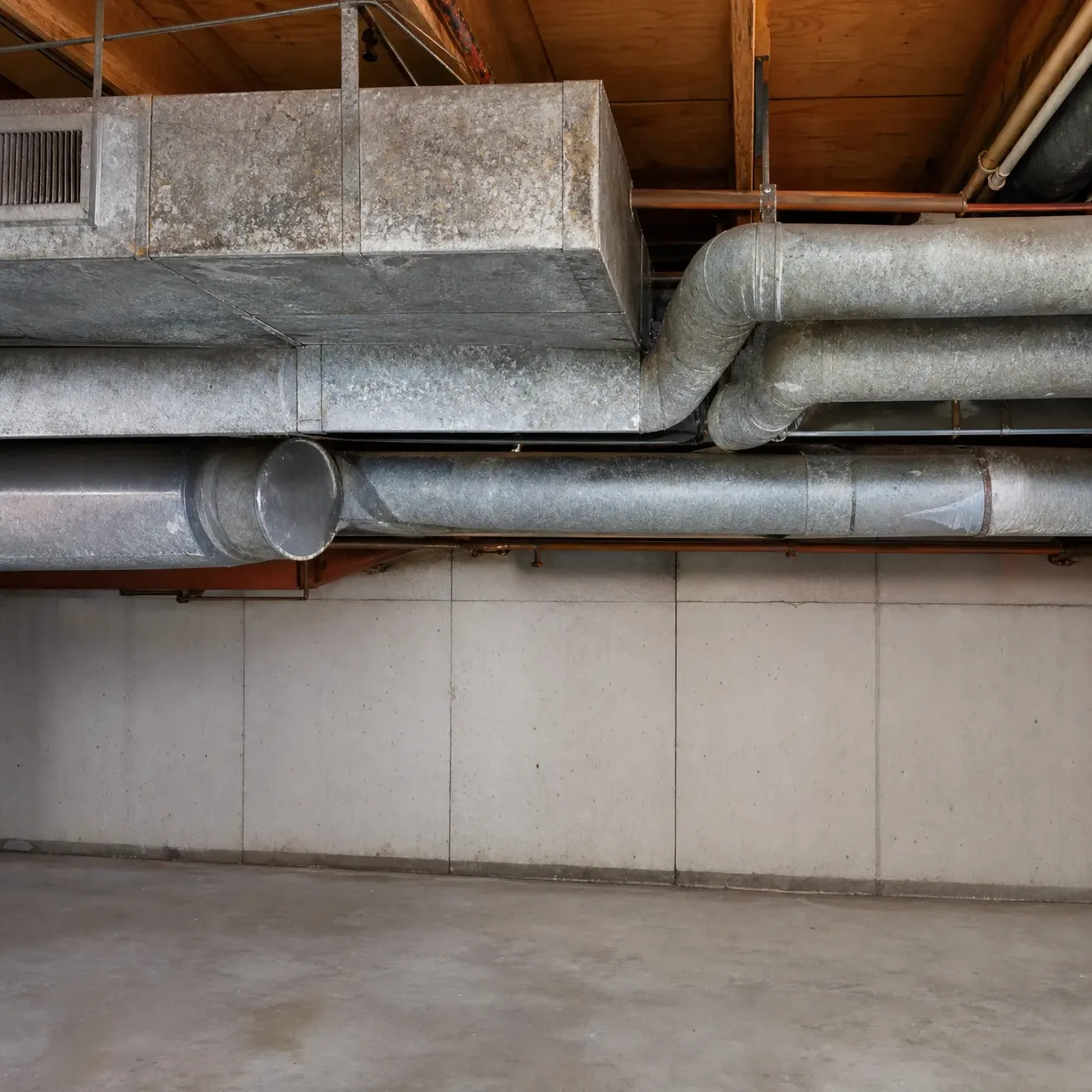

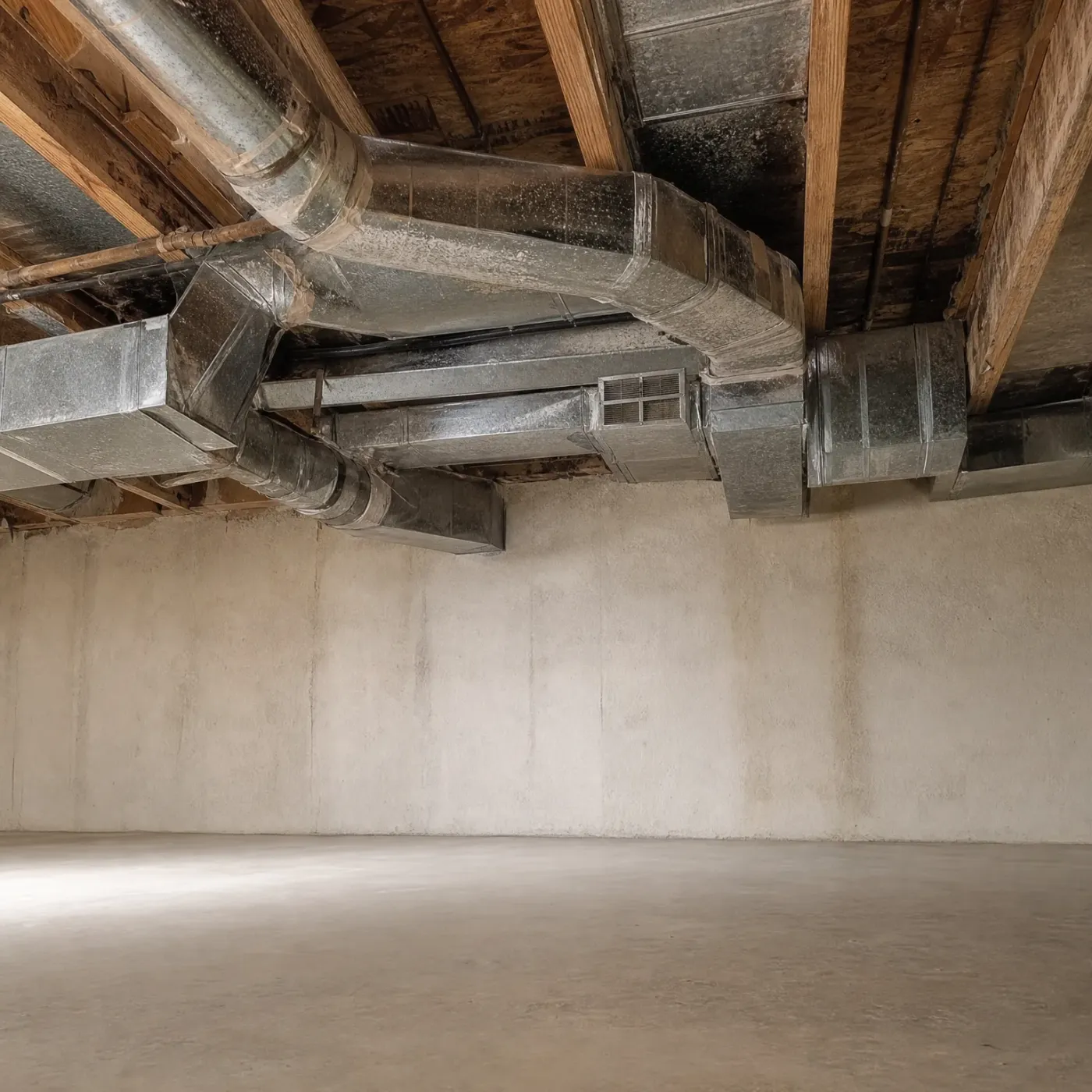
Basement interior with galvanized rectangular and round sheet-metal ductwork and copper piping running below a wood-joist ceiling, above a concrete wall and bare concrete floor.

Ducts that need a look

Here the trouble is harder to see from the floor, but it shows up as dust coating the registers, a musty smell when the furnace or AC starts, or rooms that stay dustier than they should no matter how often you clean. That's a sign the ductwork itself is the problem.

What's making you ask about your own ducts

Look at the vents themselves. A gray ring of dust around the cover, or dust that resettles on the sill a day after you wipe it, points to the supply ducts. Turn the blower on and smell the air near a vent. A musty or stale smell, especially in a house that's been shut up with the windows closed, often means something is sitting in the ductwork itself. Check a room that never gets comfortable, too hot in August or too cold in January no matter what the thermostat says. That can mean a duct run that's blocked or leaking, not just a bad vent placement. If anyone in the house has allergies that flare indoors more than they should, the ducts are worth a look before you assume it's something else.

A man in a gray knit sweater stands smiling and looking off to the side beside a white marble kitchen island, with a dining table, pendant light, and open shelving in the background.
A smiling man with short dark hair and stubble in a gray sweater sits at a stone-topped counter with a white ceramic mug, in a room with a framed picture, a plant, and shelves holding bowls.
A smiling man in a dark navy sweater sits at a wooden kitchen counter with a light ceramic mug, with white tile backsplash, open shelving and a window with potted plants behind him.
A smiling man with dark hair and a beard, wearing a dark green knit sweater, stands at a kitchen counter with a ceramic mug, with an open living room, sofa, armchair and large windows behind him.

Clean Them Anyway or Skip It for Now

Clean them anyway

  • A one time cleaning gives you a clear look at what's actually inside your ducts, instead of guessing from a gray ring at the vent.
  • If you've had renovation dust, a rodent problem, or standing water in the ductwork, cleaning removes what a filter never will.
  • Once it's done you have a baseline, so the next time you wonder about dust at the vents you'll know if something changed.
  • You stop paying attention to the mailers and the ads, because you've already checked and you know where things stand.
  • It won't lower your gas or power bill, since a dirty duct doesn't make a furnace or AC run harder.

Skip it for now

  • If nobody at home has new or worsening allergies and you don't smell must at the vents, there's likely nothing to clean out.
  • A furnace filter already catches the dust that would otherwise settle in the ducts, so the ducts stay mostly clean on their own.
  • Cleaning won't fix a musty smell that's coming from the coil or a damp basement instead of the ductwork itself.
  • Without a specific reason, dust rings, a smell, recent work on the house, you'd be paying to confirm what you already suspect.
  • You can always have it done later if something changes, so skipping it now doesn't close off the option.
Unfinished basement with bare concrete floor and walls, showing galvanized sheet-metal HVAC ducts, pipes and recessed lights beneath a wood-joist ceiling.

Ducts that stay clear

Steel ducts like these move air without adding anything to it. No dust ring builds at the vent covers, no smell when the blower starts. A system that looks like this is doing its job, and cleaning it now would only cost you money for no change in the air.

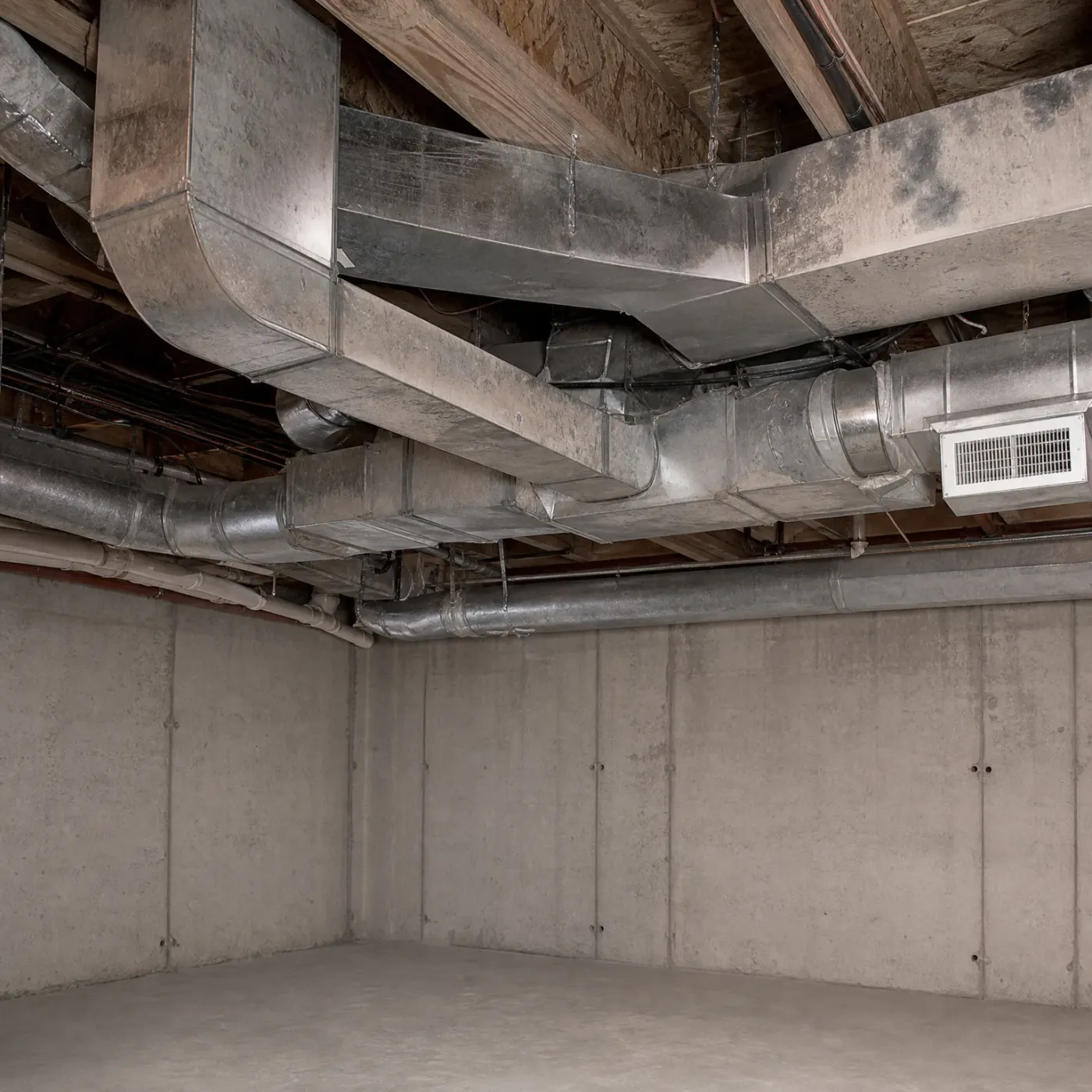
An empty basement room with bare concrete walls and floor, with galvanized sheet-metal HVAC ductwork and a vent grille running along the wooden joist ceiling.

Ducts that have built up

The dark coating on these ducts is years of dust that settled and never got disturbed. Every time the blower runs, some of it lifts back into the air you breathe. This is the case cleaning was made for, and the discoloration is something you can check for in your own basement.

A bearded man in a dark blue T-shirt sits on a gray couch, smiling and looking down to his left, with a bookshelf and a bright window behind him.
A bearded man in a plaid flannel shirt looks out a window at snow-covered conifer trees, with a steaming ceramic mug on the sill and wooden shelves holding dishes and a plant behind him.

Send one request and you're done looking

Answer a few questions instead of calling shop after shop.

There's no charge for the request.

What actually sits inside your ducts

Sheet metal duct doesn't generate dirt on its own. What collects inside comes from two places: the return side, which pulls in whatever is loose in the house before the filter catches it, and the supply side, where air leaves the furnace and slows down enough to drop whatever got past the filter. A filter that fits loosely or gets changed late lets more through, and that difference shows up as buildup over the months your furnace runs. None of this means the ducts are failing. It means they're doing exactly what sheet metal does, which is sit still while air moves through it.

Why a gas furnace changes the picture

Most furnaces around Boston burn gas, and a gas furnace moves a lot of air across a long winter to keep a house warm through months of cold. That airflow runs through the same ducts the whole time, so whatever sits in them gets carried into every room, over and over, from October to April. A duct system in a house that heats with electric baseboard doesn't see this kind of volume moving through sheet metal at all. It's one reason the question comes up more for gas-heated homes here than it might somewhere with a different setup.

How long do your ducts actually have to deal with Boston's weather?

  • Half the homes here were built by 1949

    Half the houses in Suffolk County date to 1949 or earlier. Older duct runs are more likely to have been patched, resized, or tied into a system that wasn't original to the house.

  • Heat runs October through May

    Heat runs here from October through May, about eight months of the year. That's eight months of the blower pulling household dust and pet hair through the return side before it ever reaches the filter.

  • Cooling runs July through August

    Cooling only runs July and August here. Two months is a short window, which is why summer dust and humidity in the ducts get less of a chance to show themselves before the heat starts up again.

ACS 2020-2024 · NOAA nClimDiv 1991-2020

How a duct cleaning actually goes

  • A duct cleaning job works the supply and return sides separately, since dust reaches each one through a different path.
  • A technician puts the system under negative pressure with a vacuum collection unit sealed to a cut in the main trunk line.
  • Agitation tools, usually a rotating brush or a compressed air whip, knock debris loose from the inside of the metal before it gets pulled to the vacuum.
  • Each branch line and vent boot gets worked in turn, moving toward the return so loosened dust travels toward the vacuum instead of further into the house.
  • The furnace or air handler cabinet and the coil get cleaned separately, since the collection unit on the ducts doesn't reach them.
  • A finished job should leave every supply and return register reinstalled and the sealed access cut closed back up.

A cleaning crew doesn't just run a hose through your vents. The system gets cut into, usually in the main trunk near the furnace, and a vacuum collection unit seals to that opening so the whole duct system runs under negative pressure. That pressure is what keeps loosened dust moving toward the vacuum instead of drifting into your rooms. From there the work is mechanical. A brush or a whip of compressed air travels into each branch line and knocks debris off the inside of the metal, since dust that's been sitting for years doesn't come loose on its own. The technician works branch by branch, moving toward the return side so everything gets pulled in the same direction, not pushed further down the line. Supply and return get treated as separate jobs because dust reaches them differently, one side pulls in what's loose in the house, the other delivers what's already been heated or cooled. The furnace or air handler cabinet and the coil sit outside the reach of that vacuum connection, so a crew cleans those separately if they're part of the job. When it's done right, every register and vent boot gets put back in place, and the cut made in the trunk line gets sealed again so the system runs the same as before, just without what used to be inside it.

Empty unfinished basement with bare concrete walls and floor, showing exposed wooden joists, galvanized sheet-metal ductwork, pipes, and a white vent grille overhead.
Before you get your ductwork cleaning
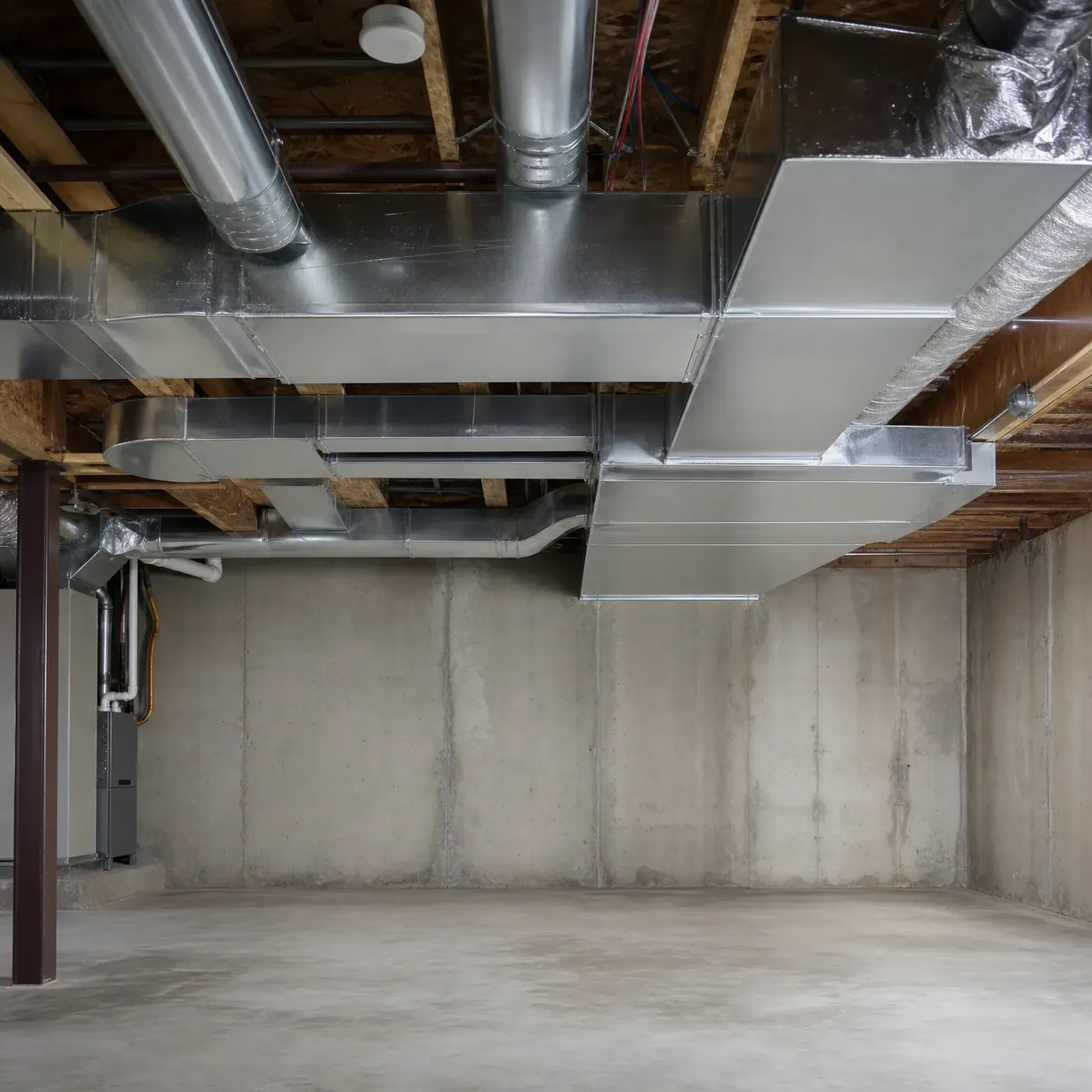
Unfinished basement with concrete floor and walls, exposed wood joists, galvanized sheet-metal ductwork, a furnace unit, a steel support column, and a small window.
After you get your ductwork cleaning

Skip it this year

If your vents show no dust ring and nobody in the house has new allergy symptoms, your money is better spent on a filter change than a cleaning.

Send my request

Get it looked at

Dust rings, a musty smell at the vents, or recent renovation work are reasons to have a contractor inspect the ducts before you decide.

Send my request

Power here costs 32.11 cents per kilowatt-hour

At 32.11 cents per kilowatt-hour, running your blower motor longer than it needs to shows up fast on the bill. A duct system clogged enough to restrict airflow makes that motor work harder to push air through your house, and you pay for every extra minute it runs.

EIA-861 2025

So is duct cleaning worth it in Boston? It depends on what your ducts are actually doing, not on the ads in your mailbox. A gray ring at the vents, a musty smell when the blower kicks on, or recent renovation dust are reasons to have someone look. A quiet system with no dust and no smell is reason enough to leave it alone and spend that money on a filter instead. The facts don't change based on who you ask, but finding someone honest to look at your specific system does take effort: searching for a contractor who actually services Suffolk County, calling a few, describing the dust ring or the smell over and over, then sorting through quotes that don't mean much without seeing your ducts. Once you send the form, that part is off your plate. You still decide what gets done to your system. You just stop being the one who has to track down who can tell you.

Dimly lit interior showing galvanized sheet-metal HVAC ductwork running below a wooden joist ceiling above a dark gray wall.

Let someone else find the pro

Fill out one short form instead of calling around.

Duct and vent cleaningDucts or ventsSuffolk County, MA
Step 1 of 2

What ZIP code is the job in?