Mini Split Installation in Cambridge, MA
A new system here will heat from October through May and cool from July through August every year. Tell us about the house, and a licensed contractor who covers Middlesex County will get in touch.
Tell us about the job
It takes about a minute.

Cambridge asks a mini-split to run most of the year
Your mini-split will work ten months of the year here. Heat runs October through May, eight months, and on winter nights that average 19°F it has to keep pulling warmth out of cold air the whole time. Then it switches over for July and August, when afternoons average 81°F and it is pulling heat back out of the house instead.
With that little downtime, a unit manufactured now still has to clear a federal floor either way, 14.3 SEER2 for cooling and 7.5 HSPF2 for heating. Given how many months this one will run, where it lands above that floor is worth asking about before it goes in.
- 8 months
- October through May, your system heats
- 2 months
- July through August, it cools
- 19°F
- the average winter night it heats against
- 81°F
- the average summer afternoon it cools against
NOAA nClimDiv, 1991–2020 normals
- Is a mini split worth it?
- For most homes here, yes. Winters run cold enough, down to 19°F on average overnight from December through February, that you need real heating capacity for eight months of the year, and a mini split delivers that plus the two months of summer cooling in July and August from one system. If your home has no ductwork, it also skips the cost of installing ducts just to run a furnace or central air. The tradeoff is upfront cost against not having to run two separate systems.
- How many rooms can a mini split cover?
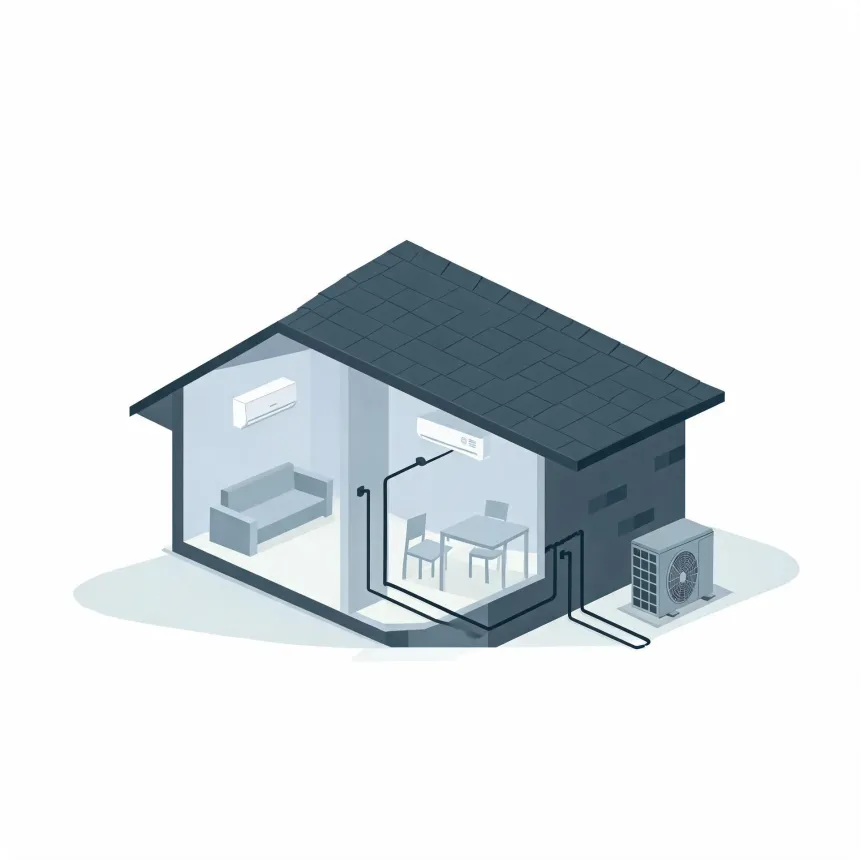
- A single outdoor unit can run anywhere from one indoor head to eight, depending on the system. Each indoor head heats and cools the room it is mounted in, so a one-to-one setup covers one room well, and a multi-zone setup with several heads covers several rooms as separate zones you can control on their own. A contractor sizing the system will look at your home's layout and room sizes to decide how many heads and what capacity you need.
- Can a mini split heat a whole house?
- It can, if it is sized and placed for that. A multi-zone mini split with heads in each main room can carry a whole house through the cold months here, October through May, as long as the system is matched to the house's heat loss and the heads reach every space that needs it. A contractor can tell you whether your home fits a whole-house layout or whether it works better as supplemental heat for specific rooms.