Mini Split Installation in Greenfield, MA
A new system here will heat from October through May and cool from July through August every year. Tell us about the house, and a licensed contractor who covers Franklin County will get in touch.
Tell us about the job
It takes about a minute.
Ten months a year, your mini-split is working
Greenfield needs heat from October through May and cooling in July and August. That covers ten months where a mini-split is either the main source of heat or the only thing cooling a room. Winter nights average 17°F through December, January, and February, cold enough that the heat pump has to work for every degree it moves indoors. Summer afternoons average 80°F, which is a lighter load, but the unit still has to run through both of those months.
A new mini-split has to meet the federal minimum for split-system heat pumps, 14.3 SEER2 for cooling and 7.5 HSPF2 for heating. That floor applies no matter what is heating the home now, including the fuel oil systems common in this area. Massachusetts also saw storm-related power loss in a tenth of households last year, and this area has logged 59 winter storms and 275 damaging wind events over the last ten years. None of that changes what the unit needs to meet, but it is worth having the installation done right the first time, since a mini-split that is struggling is not something you want to find out about on a night that cold.
- 8 months
- October through May, your system heats
- 2 months
- July through August, it cools
- 17°F
- the average winter night it heats against
- 80°F
- the average summer afternoon it cools against
NOAA nClimDiv, 1991–2020 normals
- Is a mini split worth it?
- For most homes here, yes. Heat is needed October through May and cooling in July and August, so a mini split covers both from one system instead of running a furnace and window units separately. Cold-climate models are built to keep producing heat even when winter nights average 17°F, which matters here. A lot of homes here heat with fuel oil, so a mini split also gives you a way to heat rooms without depending on oil deliveries.
- How many rooms can a mini split cover?
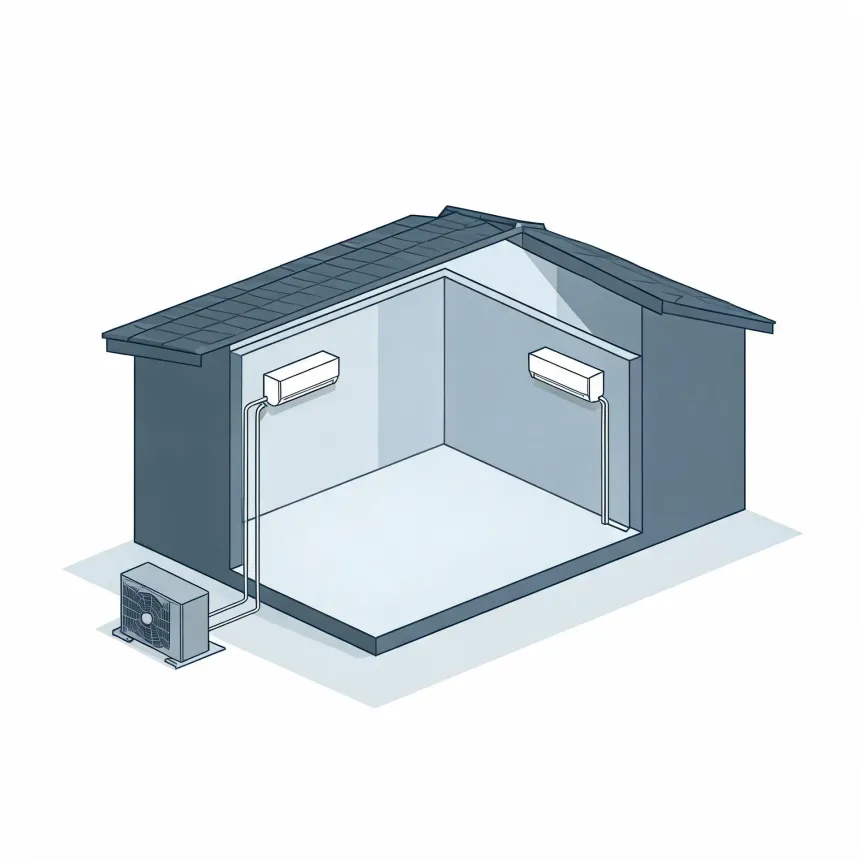
- A single indoor head covers one room or open area well. For several rooms, a multi-zone system connects up to eight indoor heads to one outdoor unit, and each head has its own thermostat, so rooms can be heated or cooled on their own. How many zones a house needs depends on its layout and size, and a contractor can work that out room by room.
- Can a mini split heat a whole house?
- A multi-zone mini split can heat a whole house if enough indoor units are placed to cover every room. A single indoor unit usually cannot do this on its own. This matters here since heat is needed from October through May and winter nights average 17°F. Cold-climate mini splits are built to keep producing heat at those temperatures, but sizing and placement have to match the house, which a contractor figures out room by room.