Mini Split Installation in Amherst Town, MA
A new system here will heat from October through May and cool from July through August every year. Tell us about the house, and a licensed contractor who covers Hampshire County will get in touch.
Tell us about the job
It takes about a minute.
Ten months of the year, your mini-split is working
Amherst homes need heat or cooling ten months of the year. Winter nights average 18°F from December through February, and a mini-split installed here has to hold heat on those cold nights, not just take the edge off a mild one. Summer only asks for two months of cooling, with afternoons around 80°F, but the same system covers both jobs.
Any mini-split installed now has to meet the federal minimum for a split-system heat pump. That means 14.3 SEER2 for cooling and 7.5 HSPF2 for heating. It's the floor, not a feature, and it applies whether you're replacing one unit or adding one to a room that doesn't have it yet.
- 8 months
- October through May, your system heats
- 2 months
- July through August, it cools
- 18°F
- the average winter night it heats against
- 80°F
- the average summer afternoon it cools against
NOAA nClimDiv, 1991–2020 normals
- Is a mini split worth it?
- For most homes it is, especially where a room runs hot, cold, or without ductwork at all. A mini split heats and cools that space directly, and with winter lows here averaging 18°F and homes needing heat from October through May, a cold-climate model earns its keep over eight months of the year. It also covers the two months of summer cooling with the same equipment. Whether it makes sense for your house depends on what you already have for heat and how many rooms need it, so a contractor should look at the layout before you decide.
- How many rooms can a mini split cover?
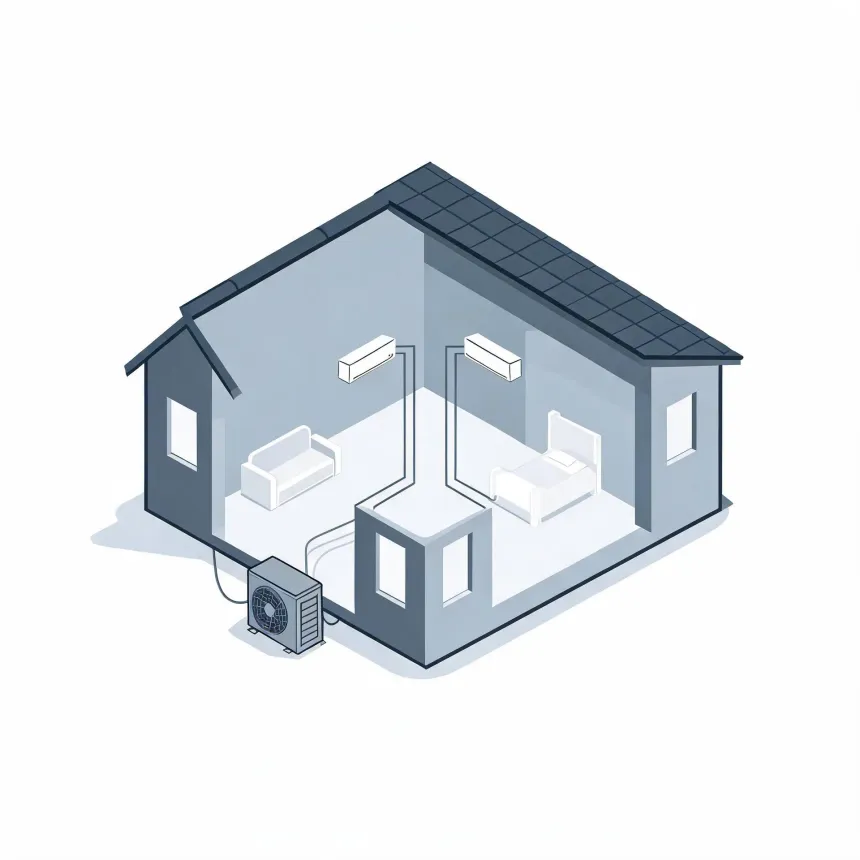
- A single outdoor unit can run one indoor head or several, depending on the system. A single-zone system handles one room. A multi-zone system runs several indoor heads off one outdoor condenser, each with its own thermostat, so bedrooms and living areas can be set differently. The right number of zones comes down to the size of each room and how the house is laid out, which a contractor measures room by room.
- Can a mini split heat a whole house?
- It can, if enough zones are installed to reach every room, but a single indoor head is only built to heat the room it's in. Homes here need heat eight months a year, from October through May, with winter nights averaging 18°F, so the system has to be sized for that cold before it can replace a whole-house heating system. A cold-climate mini split is built to keep working at those temperatures, but how many heads and what capacity depends on the size and layout of the house, which a contractor would need to assess directly.