
Duct Cleaning in Amherst Town, MA
Tell us about your home, and a licensed contractor who covers Hampshire County will get in touch.
Tell us about the job
It takes about a minute.

Eight months of heating pushes a lot of air through your ducts
Your furnace or heat pump runs October through May here, eight months of the year. That is eight months of air moving through the same ducts, carrying dust, pet hair and whatever else is in the house, and leaving some of it behind on the duct walls with every pass.
Power does go out here. About 1 in 10 Massachusetts households went at least a day without it in 2024. When that happens mid-winter, the system shuts down and starts back up once power returns, and that stop and start stirs up dust that had settled in the ducts. In a house that is heating most of the year, that buildup means the air coming out of the vents is carrying more than it should.
- 8 months
- October through May, your furnace pushes air through your ducts
- 2 months
- July through August, your air conditioner does the same
NOAA nClimDiv, 1991–2020 normals
- How often should air ducts be cleaned?
- There is no fixed schedule that fits every home. Homes with pets, a recent renovation, or someone with allergies may need it more often. If you can see dust building up at the vents or notice more dust settling around the house than usual, that is a sign it is time. A contractor can look inside the ductwork and tell you what the actual condition calls for.
- Is air duct cleaning worth it?
- It depends on what is going on in the ducts right now. If there is visible dust, debris, or signs of pests or mold, cleaning them clears that out of the air you breathe. If the ducts look and smell fine, cleaning them on a schedule for its own sake will not do much. A contractor can look inside the ductwork and tell you whether there is actually something to clean out.
- What does air duct cleaning involve?
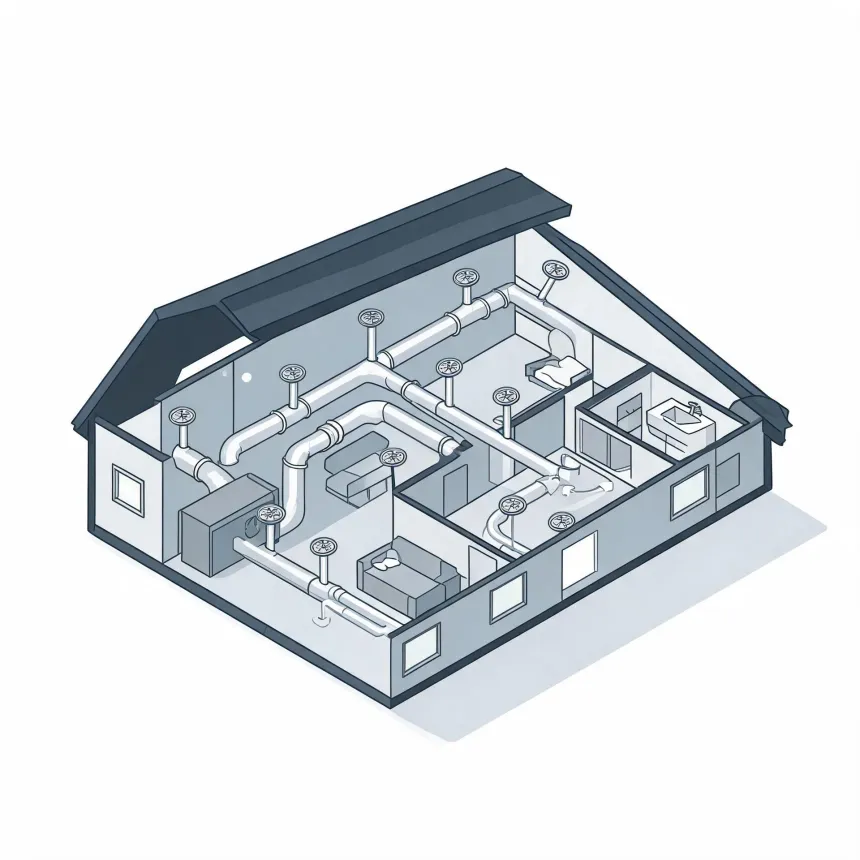
- A contractor connects a vacuum to the duct system and uses brushes or compressed air tools to knock loose dust and debris from the inside of the duct walls, then pulls it out through the vacuum. This covers the supply and return ducts, the grilles and registers, and usually the coil and blower area near the furnace or air handler. The furnace filter itself is a separate part and gets replaced, not cleaned.