Your request goes to a Worcester County pro who takes ductwork jobs.
You turn on the furnace or the AC and that musty smell comes right through the vents. It's worse in some rooms than others, maybe worse when the system has been off for a while and first kicks on. That smell almost always means moisture sitting somewhere in the ductwork, and it doesn't go away by itself.
Winters here are hard and most homes in the Worcester area heat with oil, so the ducts run for months at a stretch without a break. Summers bring their own moisture even without the heavy air you'd get further south or along the coast. Either way, if condensation or standing water has been sitting in that ductwork, it has had time to settle into the lining and the dust inside.
Finding someone who actually cleans ducts, rather than just talking about it, usually means a string of phone calls. You explain the smell, you explain the house, you get a quote, you call the next place and explain it all again. Then you try to figure out which quote actually covers the same work as the others.
This page skips that part. Tell it what's going on with your vents and your house, and it matches you with a contractor who takes on jobs like this in your area. That contractor follows up with you directly, so you're not the one doing the chasing.
What's actually in your ducts, whether it's mold, mildew, dust that's gone damp, or something in the system itself, is something a contractor needs to look at in person. No two houses in Worcester County have the same ductwork, the same vents, or the same history with moisture. The point of matching you with someone local is that they can speak to your situation specifically, not a general case.
Below, this page covers what causes the smell and what cleaning the ducts actually involves. But if you already know what you're dealing with and want to get a contractor started, that's what the button is for.
Why do my vents smell musty in Worcester, MA?
You turn on the furnace or the AC and that musty smell comes right through the vents. Maybe it's stronger in the basement, or in whichever room sits closest to the air handler. You're not imagining it, and it's not just a dusty filter. The question is what's sitting in that ductwork, and whether it's something to worry about.
Moisture is collecting somewhere in the duct system, and mold or mildew is growing on it
A musty smell from the vents means something inside the ducts is staying damp long enough for mold to take hold, usually around the AC coil or in a duct run that sits low or sweats in humid weather. Worcester summers aren't as heavy as the coast, but the air still carries enough moisture to condense on cool metal, and once that moisture sits in a dark duct with dust to feed on, the smell follows. Winters here bring the opposite problem: a duct system that stayed sealed up and damp through a muggy stretch can carry that smell into the house for months once the furnace starts pushing air through it again.
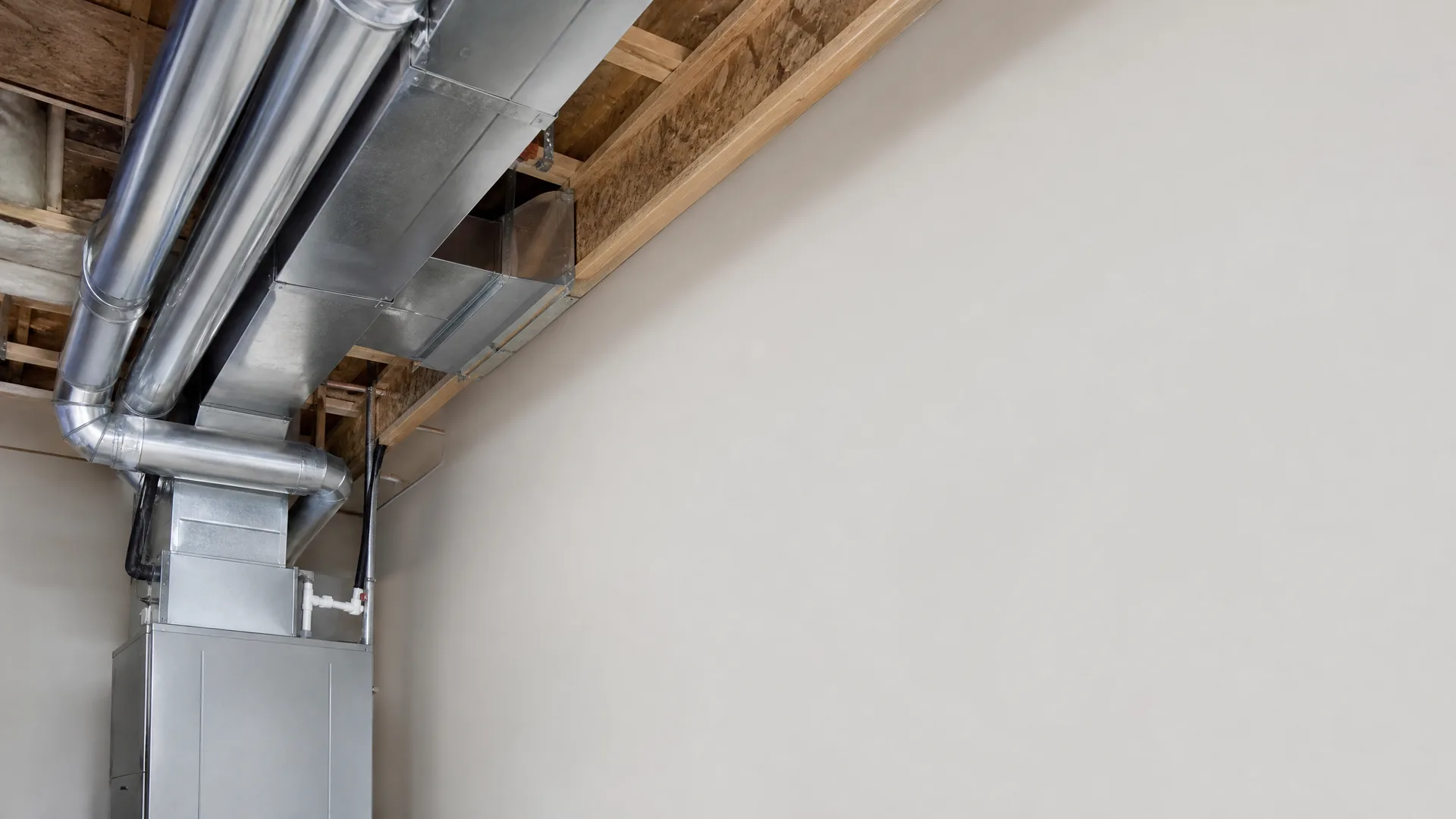
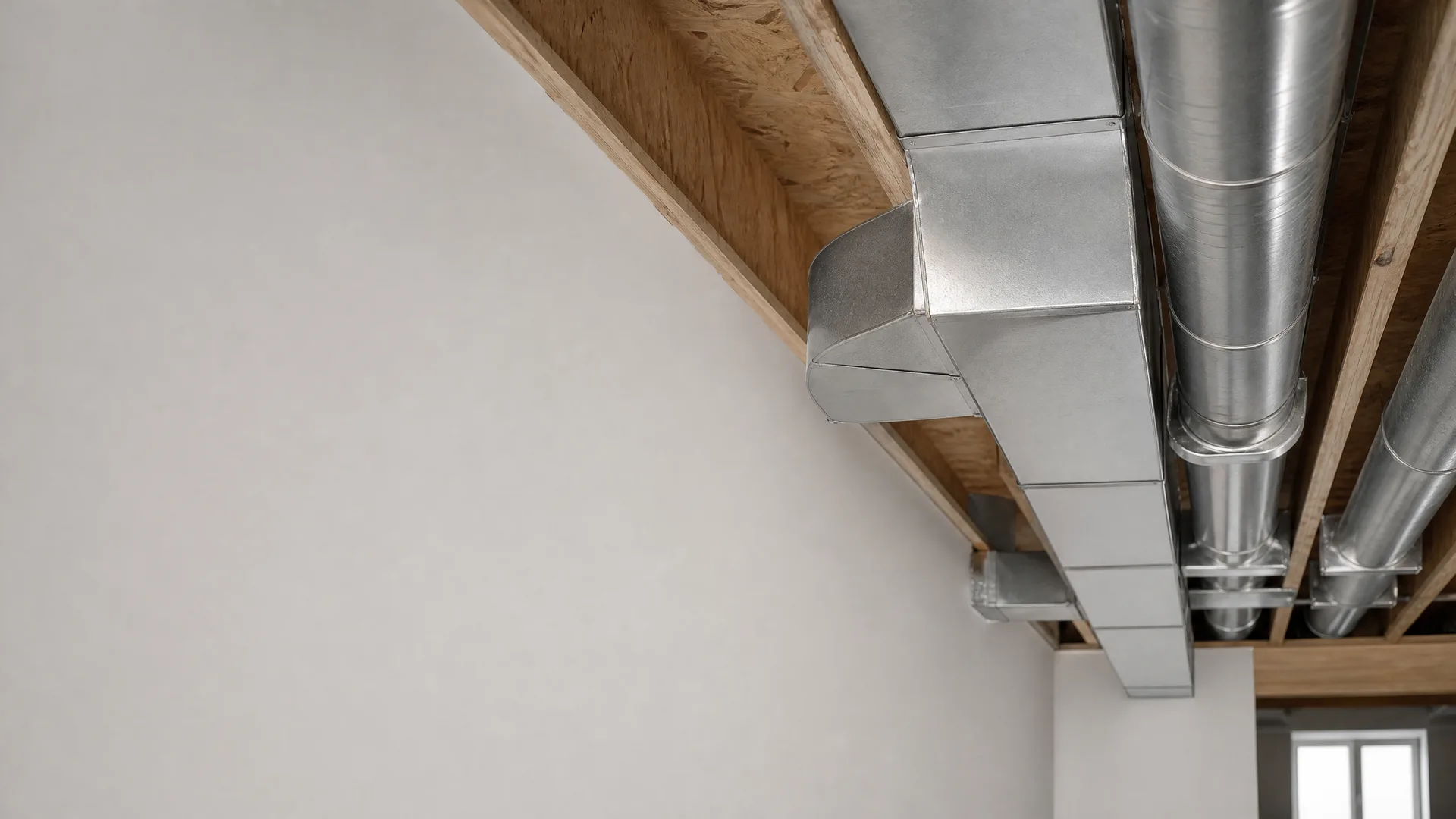
Clean, dry ductwork
This is what a duct system looks like when moisture isn't a problem. The metal is dry, the joints are tight, and the condensate line drains off to the side where it belongs. Air moves through without picking up anything it shouldn't.
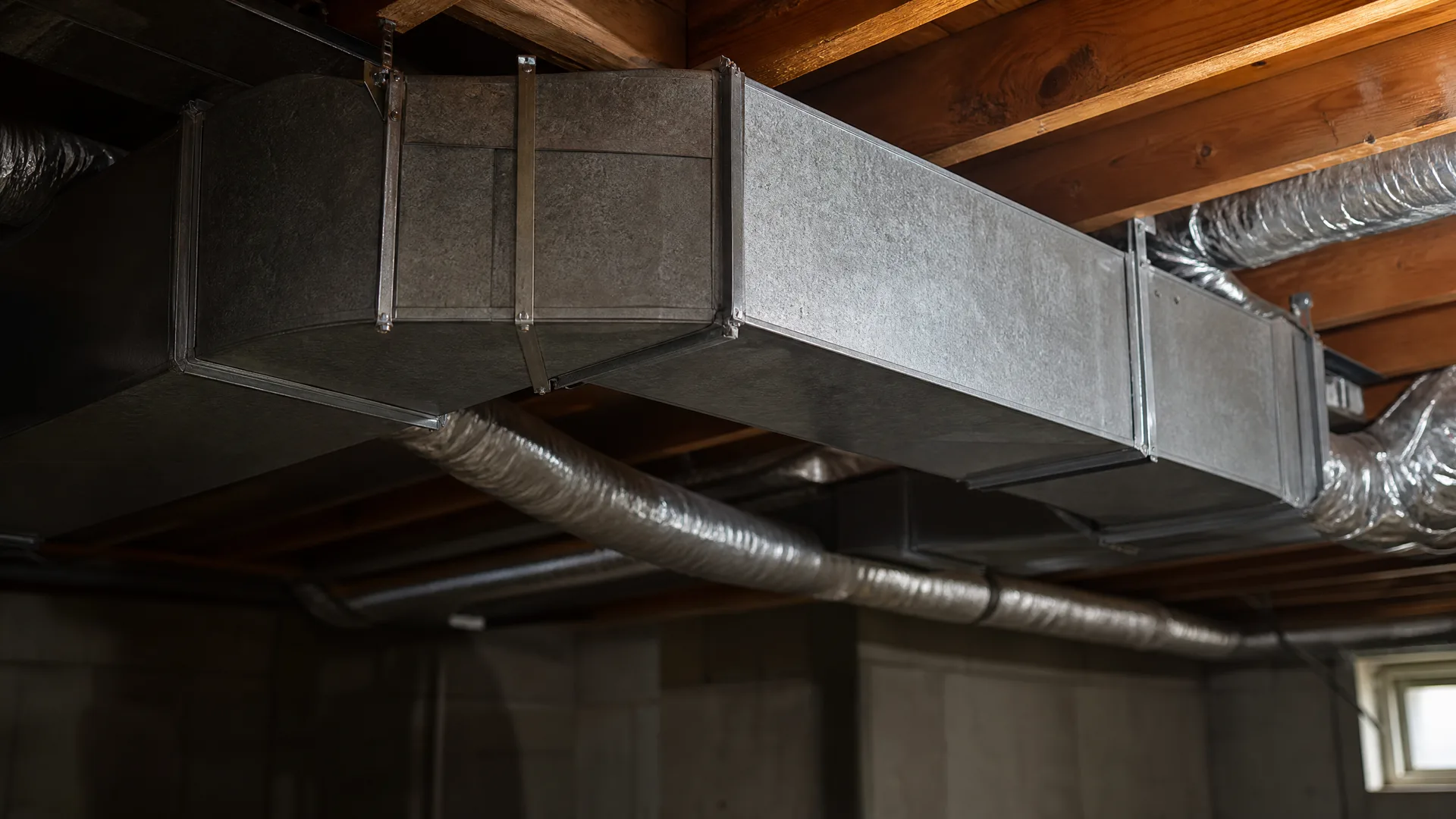
Ductwork with a moisture problem
Here the foundation wall behind the ducts shows water staining, which means moisture has been getting in. Duct runs sitting that close to damp framing and a wet wall pick up the smell and carry it straight to your vents.
Why does this smell keep coming back in a Worcester County duct system?
Half the homes here were built by 1967
Half the homes in Worcester County went up in 1967 or earlier, so a lot of this area's ductwork is old enough to have seen plenty of damp years.
Heat runs October through May
Heat runs here from October through May, about eight months of the year, and that long a stretch gives condensation plenty of chances to collect in the ducts.
Cooling runs July through August
Cooling only runs July through August here, so for most of the year that same ductwork sits closed up and still, which is exactly when mold and mildew settle in.
ACS 2020-2024 · NOAA nClimDiv 1991-2020
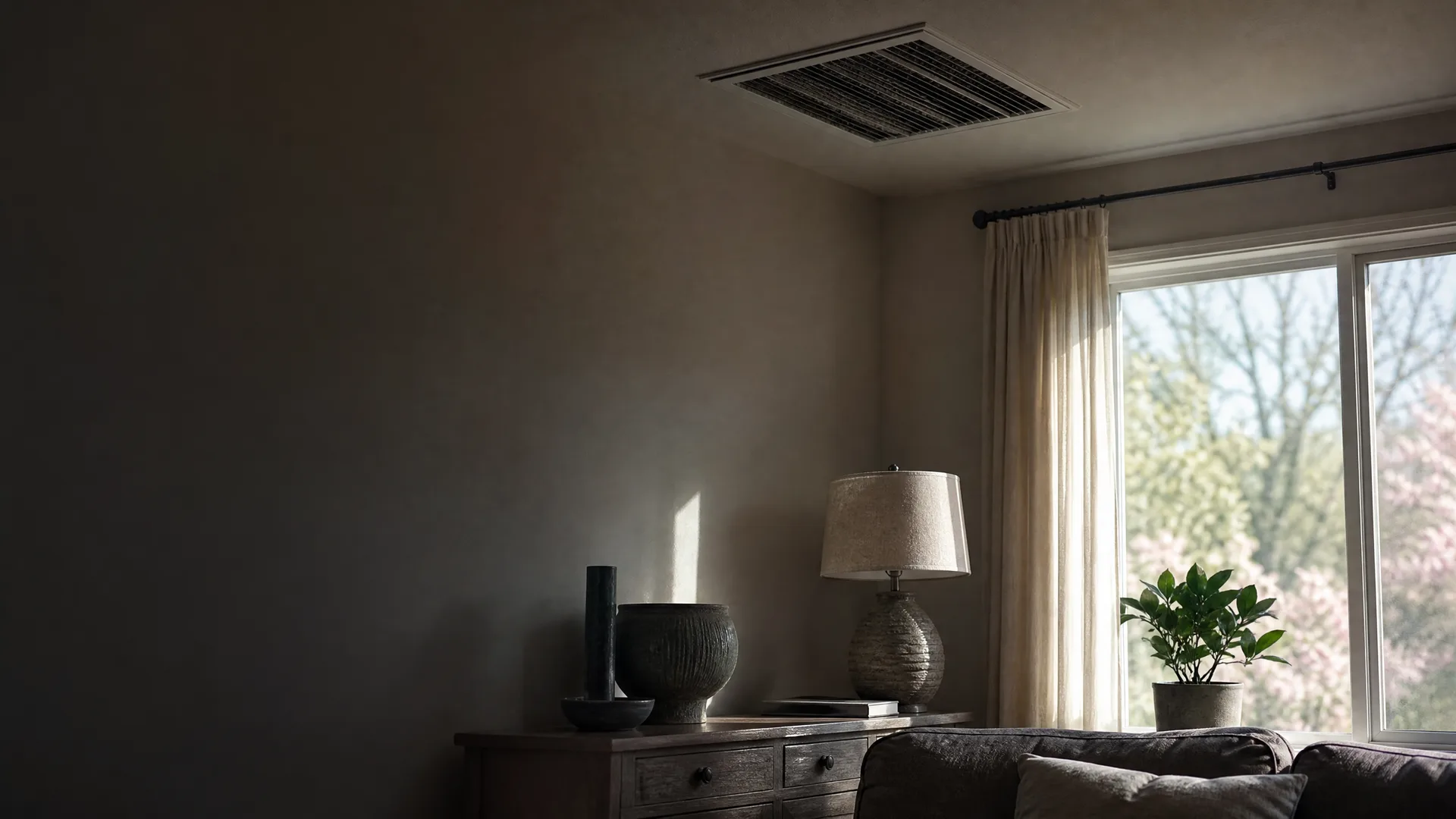
Late morning, early April, sun coming in low across the living room. You finally switch the system over from heat to the AC's first run of the year, and the vent in the ceiling kicks on. A fine layer of dust sits along the grille's slats, the kind that built up slow over a winter of oil heat running almost every day. It's settled on the side table underneath too, and along the top of the picture frame on the wall. You wipe a finger across the grille and it comes away gray. The smell reaches you a second later, right as the air starts moving. You stand there a moment, not reaching for the phone yet, just noticing it.
Get matched with a duct system pro in Worcester County
Skip searching for someone who cleans ducts in Worcester County.
There's no charge for the request.
Why the furnace off cycle matters
A duct system picks up moisture mostly when nothing is moving through it. Overnight, or any stretch where the thermostat sits idle, the air inside the ducts goes still and whatever dampness is in there has time to settle on the metal instead of getting carried off. That's why the smell is often strongest the moment a system kicks back on after sitting for hours. The first few minutes of airflow pick up whatever grew on the duct walls while the air was still. Once the blower's been running a while, the smell can fade, not because the mold is gone but because it's been diluted by drier air moving past it.
What the condensate line tells you
Central air pulls moisture out of the house and that water has to go somewhere. It drains off through a condensate line, usually to a floor drain or outside the foundation. If that line is cracked, clogged, or pitched wrong, the water backs up instead of draining, and it ends up sitting in the duct system or the cabinet around the air handler. A drain pan with standing water, or a damp patch on the floor near the unit, points straight at this. It's one of the few parts of the system worth checking by eye before anyone opens up the ductwork itself.
Leave it alone and see if it airs out on its own. Some weeks it seems better, then the furnace kicks on after a cold snap and the smell is back as strong as it was in October.
Have the ductwork cleaned and the moisture source found. The smell doesn't come back once the mold or mildew causing it is actually removed from the ducts instead of just waited out.
Mold needs three things, and a duct system sitting idle gives it all of them at once. Moisture settles in the metal when the furnace or AC isn't running. Dust and skin cells built up on the duct walls over months of use give it something to feed on. The air inside sits still with nothing moving through it. Put those together for long enough and what grows is mold, not just a bad smell passing through. That's why the musty smell keeps showing up even after you've aired the house out or run the fan for a while. It's also why a new filter doesn't fix it. Mold spores are small enough to get past a standard filter and go right back into the rooms you're breathing in. Cleaning the ducts does two things a filter can't. It takes the mold out, and it takes out the dust and buildup that was feeding it. Once the system is sealed back up and stays dry, there's nothing left for mold to grow on until moisture finds its way back in.
How the smell actually starts
Mold needs three things to grow: moisture, a food source, and still air, and a duct system off cycle gives it all three.
The dust and skin cells that collect on duct walls over months are enough food source for mold once moisture sits long enough.
A musty smell is usually mold growing somewhere in the system, not just damp air passing through once and leaving.
Mold spores are small enough to pass straight through a standard furnace filter and recirculate through the house.
Cleaning removes the mold and the material it was feeding on, not just the smell sitting in the air that day.
A duct system that stays sealed and dry afterward won't regrow mold until moisture gets back in.
Before you get your ductwork cleaningAfter you get your ductwork cleaning
1
A technician inspects every duct run with a camera to find the moisture source.
2
Vacuum equipment connects to the ductwork to pull debris under negative pressure.
3
Agitation tools knock mold and dust loose from the duct walls as it's pulled.
4
Supply and return vents get cleaned and the condensate drain checked for proper flow.
Power here costs 31.51 cents per kilowatt-hour
At 31.51 cents per kilowatt-hour, running a blower fan longer than it needs to run adds up fast. A duct system clogged with mold and dust makes that fan work harder to push air through, so clearing it out is one less drag on your bill.
EIA-861 2025
Running it in the room smell lives
A room that keeps the smell can be closed off at its register and skipped until the duct system gets cleaned. That stops the musty air from spreading into rooms that don't have the problem yet, but it also means living without heat or cooling in that room for however long you put the job off. If it's a bedroom, that's a room you can't really use until it's dealt with.
Running it everywhere else
Leave every vent open and the system keeps mixing that air through the whole house, so the smell shows up in rooms that never had a moisture problem to begin with. You get full use of every room in the meantime, but the smell spreads with the air instead of staying put, and it tends to get noticed by anyone who walks in from outside.
A musty smell from your vents means moisture got into the ductwork and something is feeding on it. Airing out a room or running a candle in the hallway doesn't touch what's sitting inside the ducts themselves. That takes a camera inspection to find where the moisture is coming from, and equipment that can actually pull the mold and dust off the duct walls instead of just circulating it further through the house. You don't have to spend an evening calling around Worcester County for someone who does this, explaining the smell to three different people, then sitting with quotes trying to guess which one is fair. Answer a few questions about your system and what you're smelling, and a contractor who handles duct cleaning in this area will reach out to you directly. The smell has a source. Once it's found and the ducts are actually cleaned out, the air coming through your vents stops carrying it.