
Signs of leaky ductwork in Worcester, MA
What are the signs of leaky ductwork in my house?
Oil heats most Worcester County homes, and with power rates among the highest in the country, a duct system losing air pushes both bills up fast. You've noticed something off, maybe a room that never warms up or a furnace that seems to run too long, and you want to know what actually points to a leak before you call anyone.
Rooms that won't heat or cool evenly, higher bills, and dust around the vents
A leak in your ductwork lets heated or cooled air escape into the attic, basement or crawl space instead of the room it was meant for. The clearest sign is one room that stays cold in January while the rest of the house is fine, or a bedroom that never cools down in July. You might also notice your oil burner or AC running longer than it used to, or a heating bill that climbed without a harder winter to explain it. Dust building up fast around vents or furniture is another clue, since a leaking return pulls in attic or basement air and carries that dust through the house. Any one of these on its own could mean something else, but two or three together usually point to the ducts.
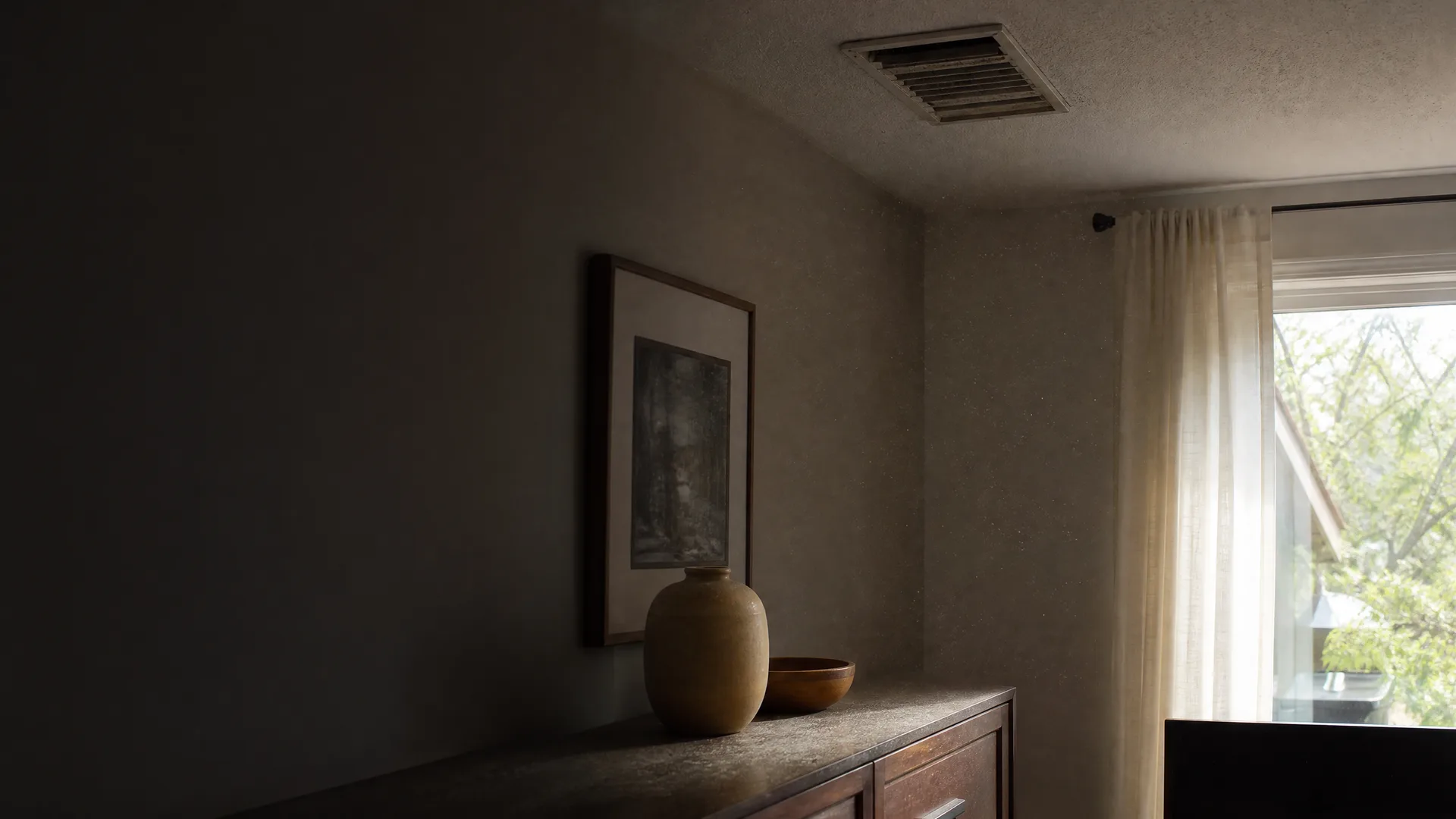
Saturday morning, that stretch in April when the furnace still kicks on before the sun's up but the afternoon gets warm enough to open a window. You're vacuuming the living room and you stop under the ceiling vent, the one over the couch. There's a gray line of dust fanned out across the grille, and more of it settled on the lampshade and the top of the bookcase below. You wipe the shade and the cloth comes back dark. You've dusted this room twice this month already. The vent looks the same as the one in the hallway, but nothing collects under that one the way it does here.
Why does one room never feel right?
Walk the house room to room. One bedroom runs cold all winter no matter where the thermostat sits, or the room over the garage sweats in July while the rest of the house is fine. Check the vents themselves. A register that barely stirs the air while the one next to it blows hard means the duct feeding it is losing air somewhere between the furnace and that room. Look along the duct runs in the basement or attic if you can get to them. Streaks of dust around a joint, or tape that's gone brittle and separated, mark a spot where air is escaping instead of reaching the room. The furnace or air handler running longer than it used to, with your oil tank emptying faster, points the same direction.
Why attic and crawlspace runs lose the most
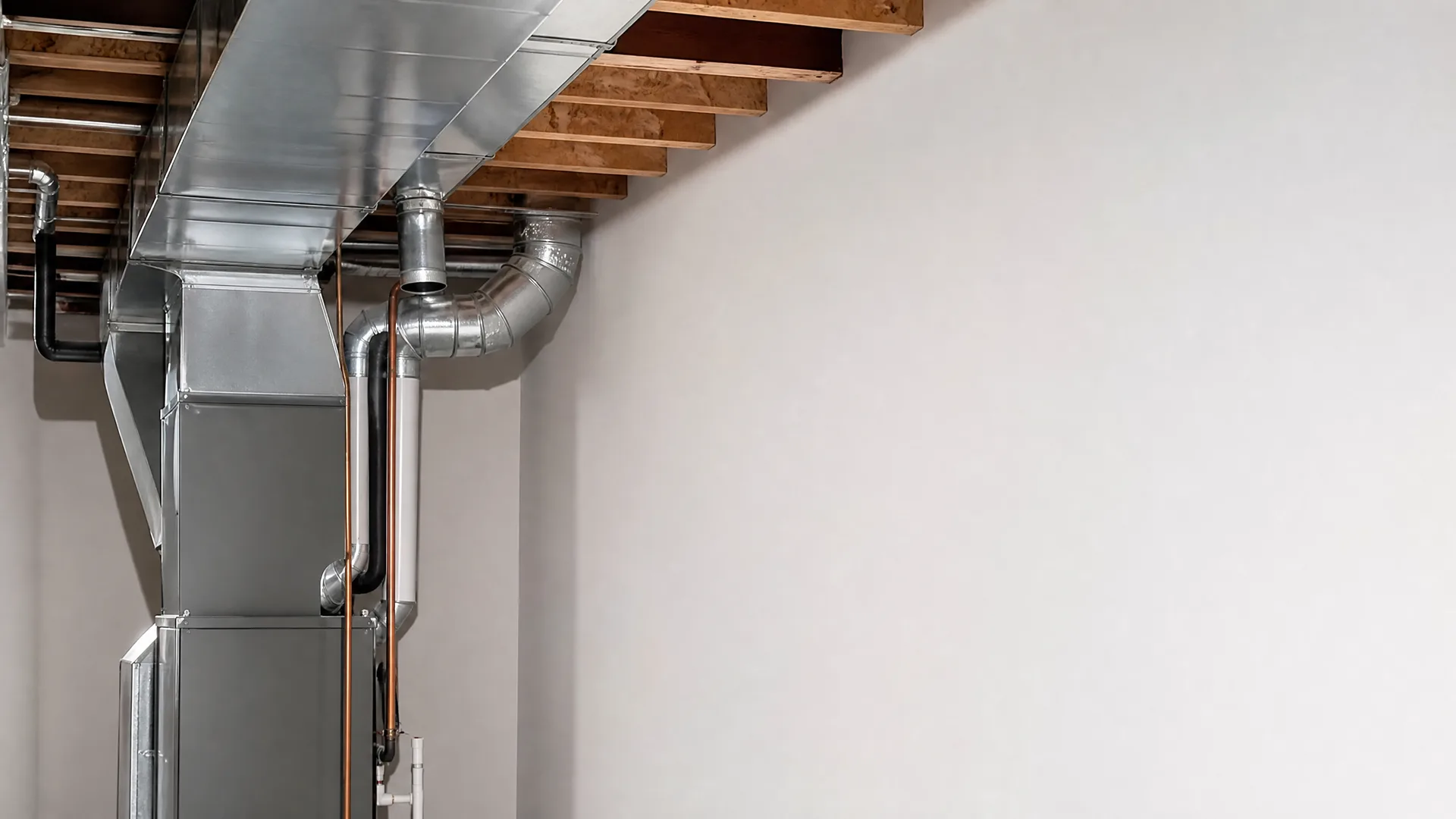
Ductwork running through an attic or crawlspace sits outside the heated part of the house. Any leak there dumps warm air straight into that unheated space instead of the room it was meant for. A basement or first-floor run that leaks still loses air, but some of that air ends up inside the house anyway. The attic and crawlspace runs are usually where the worst losses are, because nothing there catches what escapes.
What the seams are made of
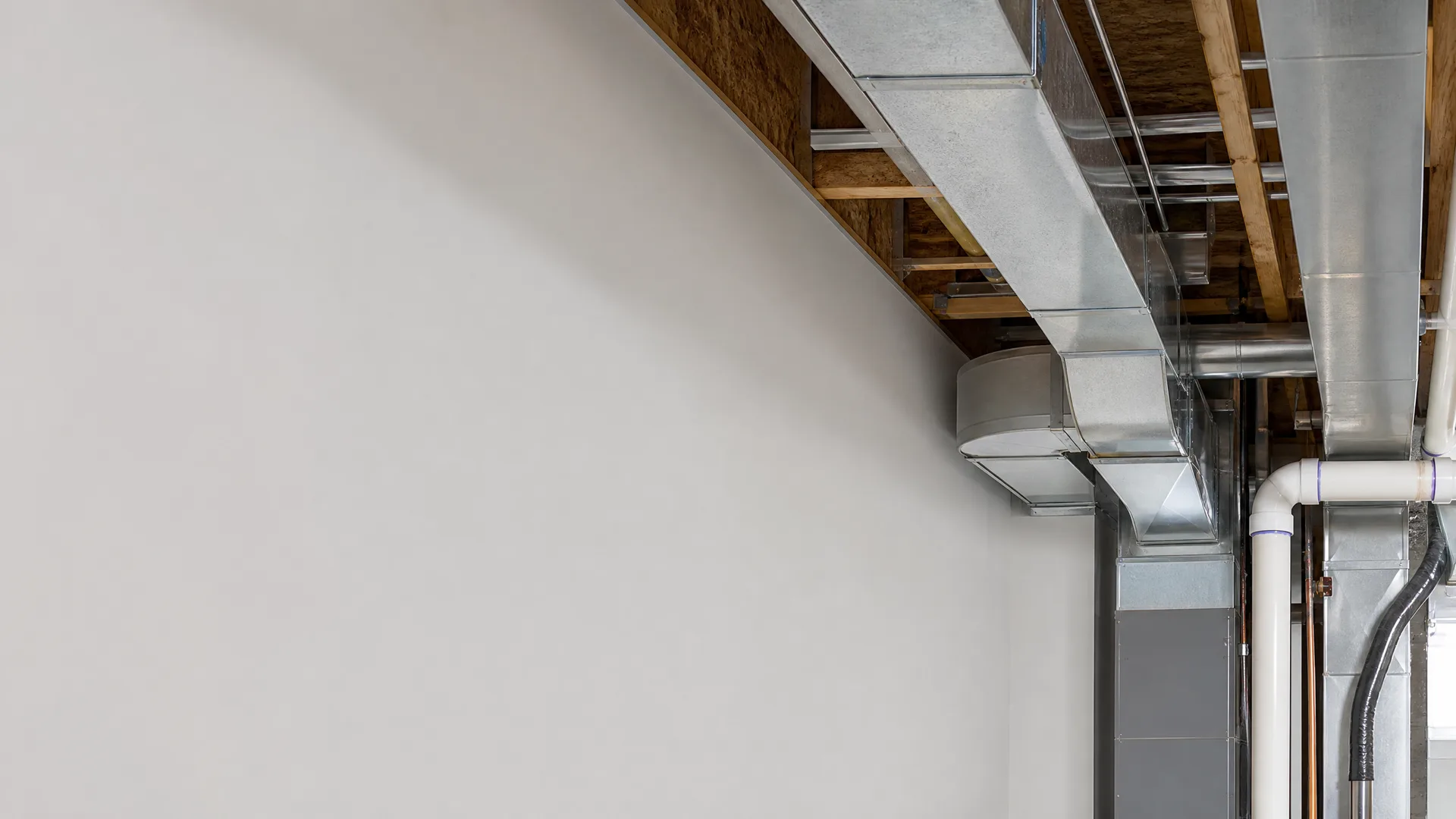
Most duct joints are sealed with a cloth tape or a mastic paste, not the silver tape sold at hardware stores for the job. That silver tape dries out and lets go after a few years, especially where it crosses a joist or takes heat from a furnace plenum. Once it releases, the seam stays open until someone reseals it. A duct system can look intact from the outside and still have several seams like this failing out of sight.
Power here costs 31.51 cents per kilowatt-hour
At 31.51 cents a kilowatt-hour, any electric resistance heat or backup strip your furnace leans on costs more here than almost anywhere else. A duct system leaking warm air into the attic means that expensive electricity, or your oil, is paying to heat a space nobody uses.
EIA-861 2025
Leaky ducts versus a dirty filter
A clogged filter and a leaky duct can look alike at first. Both leave a house that heats or cools unevenly, both push your oil or electric bill up, both make the furnace or air handler run longer than it should. The difference is where the air goes. A dirty filter chokes the air before it ever leaves the furnace, so every room gets less of it. A leak lets air escape between the furnace and the room, so some rooms get plenty and others barely get warm or cool air at all. If changing the filter doesn't even out the rooms, or the unevenness comes back a few weeks after a fresh filter, the duct itself is more likely the problem.
A quick check versus a real answer
You can learn a lot on your own. Hold your hand near a duct joint or boot while the system runs and feel for air moving where it shouldn't. Look for that gray dust line Saturday cleaning turns up. Note which rooms never match the thermostat. All of that tells you something is wrong and roughly where. It doesn't tell you how much air you're losing, whether the loss is in a buried attic run you can't reach, or whether sealing one joint is enough. A contractor with duct testing equipment can put a number on the leakage and find runs hidden in the attic or crawlspace that no amount of hand-checking will reach.


It's off your list after this
A licensed pro who works in Worcester County gets your request.
After this form, you can stop searching for a duct system pro.
Sending the form costs nothing.
Cleaning Your Ducts or Sealing Them
Duct Cleaning
- Clears dust, pet hair and debris sitting inside the ducts, which can ease airflow but does nothing for a torn seam or a disconnected run.
- A tech can look at accessible duct sections while cleaning and flag an obvious gap or crushed section near a register.
- Cleaning won't stop warm or cooled air from escaping into the attic or crawlspace through a leak.
- If dust keeps collecting fast near one register, that can point to a leak pulling in attic or crawlspace air, which cleaning alone won't fix.
- Removes buildup inside the metal but leaves any loose connection, split seam or disconnected joint exactly as it was.
Duct Sealing or Repair
- Closes the gaps, loose joints and torn seams that let conditioned air escape before it reaches the room.
- Addresses the room that never warms or the register with weak airflow at the source instead of masking it.
- Stops oil or expensive electric heat from paying to warm an attic or crawlspace instead of your living space.
- A tech sealing ducts can also spot where cleaning is overdue, since both jobs mean opening up the same system.
- Won't clear dust or debris already built up inside the ducts, so a dirty system stays dirty after sealing.






Ductwork is built in sections, straight runs and elbows and takeoffs, and every joint between them is supposed to be sealed with mastic or foil tape, not the cloth duct tape it's named after, which dries out and lets go within a few years. A leak almost never means a hole punched in the side of a duct. It means a joint where two sections meet has come apart enough for air to escape under pressure, or a seam along a flex run has worked loose where it was crimped to a collar. The furnace or air handler pushes air through the whole system at once, so the pressure at a loose joint near the start of a run is different from one way out at the end, which is part of why some rooms lose more than others. A tech checking for this pressurizes the system and looks for air moving at the joints, often with a smoke pencil, rather than trying to spot a leak by eye in a dark attic or crawlspace.
How old is the ductwork you're dealing with?
Half the homes here were built by 1967
Half the homes in Worcester County were built in 1967 or earlier, per Census data, so your ducts may be original sheet metal that's outlived its sealant.
Heat runs October through May
Heat runs October through May here, about eight months. A leak on that run wastes oil the whole stretch, not just a few cold weeks.
Cooling runs July through August
Cooling only runs July and August, so a leaky return or supply during those two months shows up fast as a room that won't cool down.
ACS 2020-2024 · NOAA nClimDiv 1991-2020
What the signs add up to
- A gray line on the carpet under a vent or a wall of dust near a register points to a leak moving air where it shouldn't.
- A room that stays cold in January or hot in July while the rest of the house is fine usually traces back to a duct run losing air before it arrives.
- Ductwork in an attic, crawlspace or over bare joists leaks heat into unheated space instead of the room it was built to reach.
- Mastic or foil tape holds a joint for decades, but old cloth duct tape dries out and lets go within a few years.
- A furnace or air handler running longer than it used to, with no change in the filter, points to lost air rather than a dirty system.
- Half the ductwork in Worcester County dates to 1967 or earlier, old enough that original sealant has likely failed somewhere along the line.
Put it together and the picture is simple. Dust around a register, a cold bedroom, a furnace that runs longer than it used to, none of these happen on their own. They point back to the same thing: air leaving the ducts before it reaches the room it was sent to heat or cool. In a house where oil carries most of the heating load and electricity runs among the highest rates in the country, that lost air is not a small thing. It is oil burned or electricity drawn to heat a crawlspace or an attic instead of your living room. Some of this you can check yourself. Look at the vents, feel for weak airflow at the register farthest from the furnace, walk the house room to room in a month when the thermostat is working hard. Some of it you can't, because the worst leaks sit in duct runs behind walls or above ceilings where a joint has pulled apart and nobody's seen it. Age matters here too. A lot of the ductwork in Worcester County went in with houses built in 1967 or earlier, and the sealant on those joints was never meant to last this long. None of this means the whole system has to come out. It means someone needs to find where the air is actually going, and seal the runs that are losing it.


Stop chasing a duct system pro
A tech who services ducts all over Worcester County every heating season has seen what cloth tape and old sheet metal joints do after enough winters, and knows where to check first. A duct cleaning gets eyes on the sections that are reachable, so a torn seam or crushed run gets flagged while the tech is already in there, not left for you to find later with a cold room or a high oil bill. One contractor takes your request, local and licensed, so you hear from someone who actually works this equipment, not a string of callbacks.
Your request stays with one local pro.
You're not committing to anything by asking.