Profile view of a bearded man wearing a black baseball cap and a dark gray T-shirt against a plain light background.

Why your furnace ignitor keeps failing in Massachusetts

RepairFurnace or heatingMassachusetts
Step 1 of 2

What ZIP code is the job in?

A furnace ignitor that keeps burning out is usually getting hit with power it isn't built for. The most common cause is a cracked hot surface ignitor from age, but in a lot of Massachusetts homes the real problem sits upstream of it. If the furnace is short-cycling, turning on and off more than it should, the ignitor glows and cools down over and over, and that stress cracks it fast. A dirty flame sensor can cause the same short-cycling by telling the system the flame isn't there when it is. A clogged filter restricting airflow, a draft issue from the vent pipe, or a control board sending bad signals can all do it too. One cracked ignitor is normal wear after years of winters. Two or three in a row means something else is wearing it out, and that part needs to get found before you replace the ignitor again.

An older beige furnace with two louvered vent panels stands on a concrete basement floor, connected to galvanized ductwork and a metal flue pipe, with gas piping and flexible conduit on the wall behind.
Before you get your furnace repair
A beige high-efficiency furnace in an unfinished basement, with white PVC vent pipes, a yellow gas line, metal ductwork, and exposed wood framing on a concrete floor.
After you get your furnace repair

Short cycling wears it out fast

A hot surface ignitor is rated for a certain number of heat cycles, not a certain number of years. Every time the furnace fires, the ignitor glows white hot for a few seconds before the gas valve opens, and that's the moment it's most likely to crack. If your furnace is starting up more often than it needs to, maybe from a dirty flame sensor or a thermostat set wrong, you're burning through that cycle count in a fraction of the time it should take.


Voltage swings strain the circuit

Hot surface ignitors draw a specific amount of current, and most are built to run on close to 120 volts. If the power coming into the furnace runs low, from a loose connection, an aging transformer, or the rest of the house pulling current at the same time, the ignitor has to work harder to reach ignition temperature. That extra strain is often what turns a part that should last years into one you're replacing every heating season.

A smiling man with dark curly hair in a navy t-shirt sits on a gray couch indoors, with a large-leafed plant and a window in the background.
A bearded man in a plaid flannel shirt stands in a kitchen looking out a window toward snow-covered shrubs, with a steaming mug on the windowsill and potted plants on a shelf behind him.

You already know the furnace is cutting out some nights this winter. What you don't see is the ignitor taking a hit every time it short cycles, until the day it won't glow at all.

That's a no-heat call on a night that's already below freezing, and a part that gets replaced again in a year instead of lasting the way it should.

A smiling man in a gray long-sleeved shirt stands in a kitchen looking to the side, with open shelves of dishes, a white mug on the counter, a potted plant, and a view through a doorway into a living room.
A smiling bearded man in a green sweater sits at a white marble kitchen island with a mug, potted plant and bowl of fruit, in a bright white interior with open shelving and an arched doorway.
A smiling man with dark curly hair and a beard, wearing a dark green knit sweater, stands at a white marble kitchen counter with a dark blue mug, with open shelving, pendant lights and a houseplant behind him.
A smiling man in a green ribbed sweater stands behind a wooden table holding a ceramic mug of coffee in a kitchen with white subway tile, shelves of potted plants, and a bowl of fruit.

Keep ignoring the short cycling

The furnace keeps doing what it's doing now. It fires, runs a few minutes, shuts off, and fires again a short while later, hitting the ignitor with another cold start every time. Each one of those cycles uses up some of the life the ignitor has. The crack that ends it is already working its way across the ceramic, and you won't know it's there until the morning it doesn't glow. That tends to happen on a cold night, because that's when the furnace is working hardest and cycling the most. At that point it's a no-heat call, not a tune-up.

Have someone look at why it cycles

A technician checking the ignitor can also check what's making the furnace short cycle in the first place, whether that's airflow, a flame sensor reading dirty, or something in the limit switch. Fixing the ignitor alone gets heat back for a while, but if the short cycling isn't the thing that gets looked at, the next ignitor wears out the same way the last one did. Once you send the form, you're not the one calling around Massachusetts furnace repair shops or explaining the short cycling story twice. Someone takes that over, and the furnace gets looked at as a whole system instead of one part.

Winter nights average 21°F statewide

At 21°F, your furnace is firing often and firing cold. A cracked ignitor already struggling with bad power now has to punch through colder air on every start. That's more strain on a part that's already working harder than it should.

NOAA nClimDiv 1991-2020 county normals weighted by homes

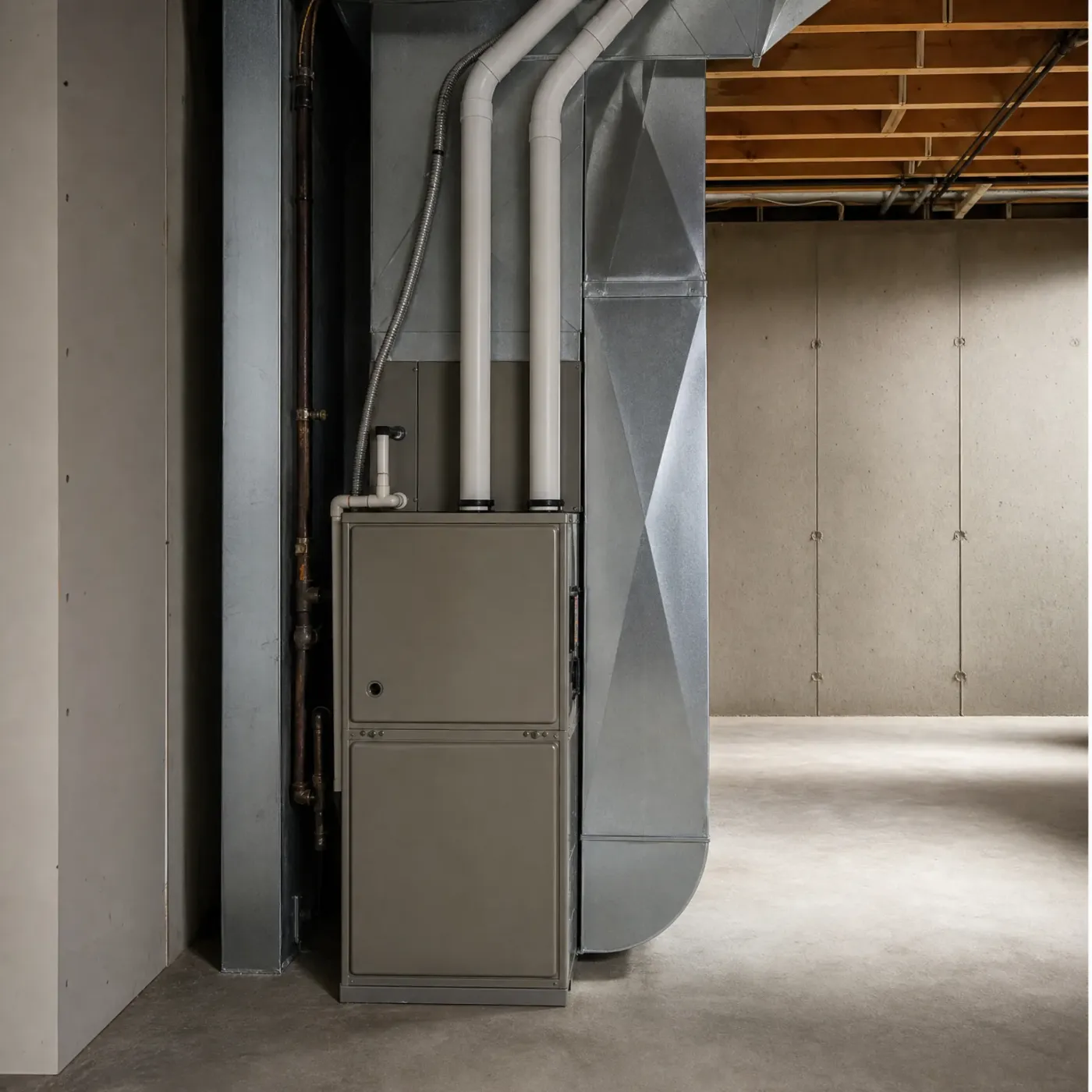
A gray high-efficiency furnace in a basement, connected to sheet-metal ductwork on the left and white PVC vent pipes above, with black gas and drain piping and an exposed wood-stud wall with OSB sheathing on the right.

Running the way it should

This is a furnace firing clean. The ignitor glows, the gas valve opens, and the burners catch on the first try. No short cycling, no repeated cold starts chewing through the ignitor's rated life. It just runs through the heat call and shuts off.

An older gas furnace with two louvered front panels stands on a concrete basement floor beside galvanized sheet-metal ductwork, pipes, and a weathered concrete wall.

Headed for a no-heat call

This is an older furnace that's been absorbing bad power and short cycles for a while. The moisture on the walls around it isn't helping anything nearby stay dry. An ignitor in a furnace like this has already taken more hits than one in a furnace that starts clean.

What are you noticing with your own furnace

You probably hear the furnace click, catch for a second, then go quiet again before it tries once more. Maybe a burner smell right after it kicks on, or the blower running longer than it used to for the same amount of heat. If you've swapped the ignitor once already this winter and it's already acting up again, that's the pattern: something is working the ignitor harder than a normal start should, and it won't stop on its own. Left alone, that usually ends with no heat at all on a cold night, and a thermostat that just keeps calling for warmth the furnace can't deliver.

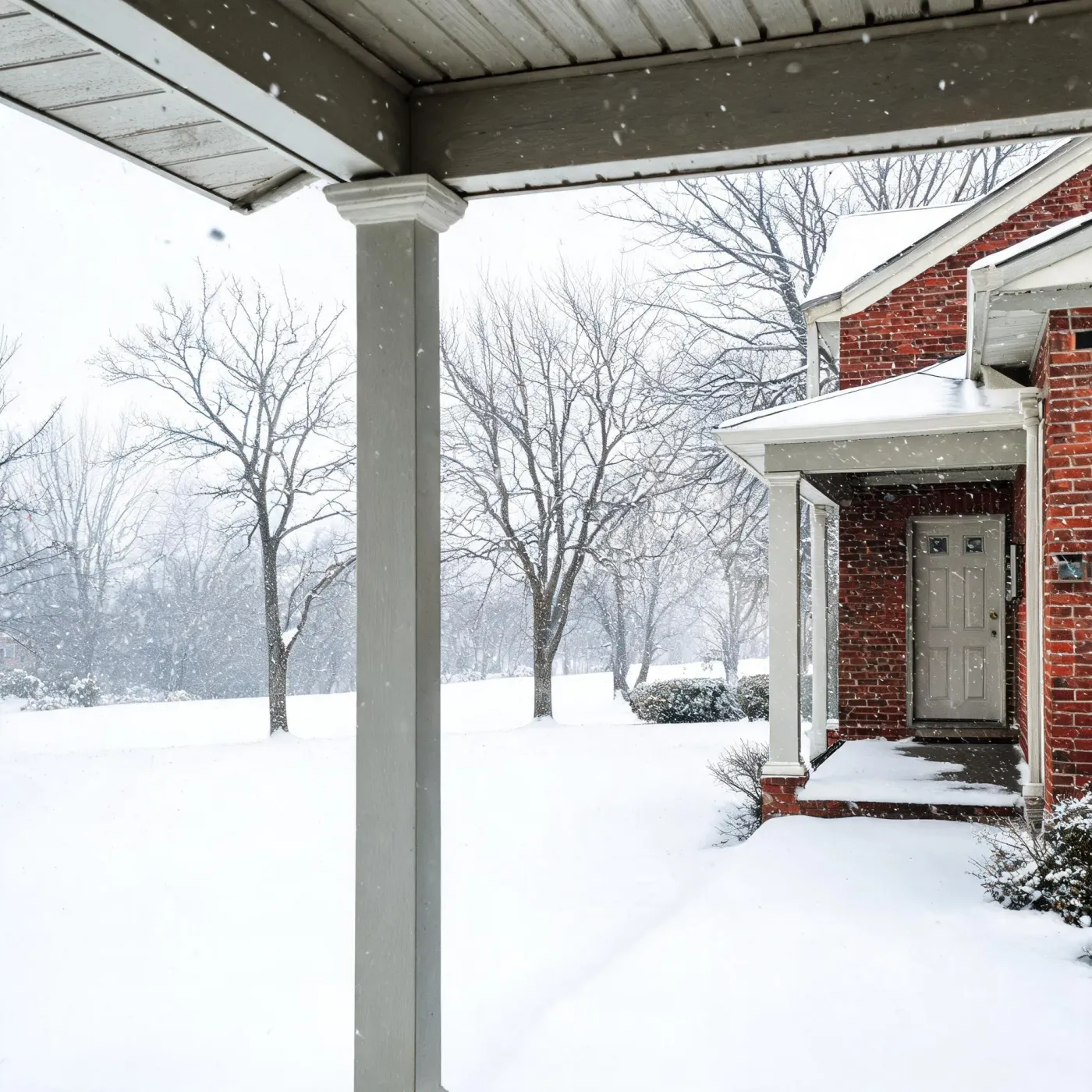
View from under a covered porch with a white column toward a red brick house entrance with a gray door, surrounded by deep snow, bare trees, and falling snowflakes.

Statewide, winter nights average 21°F, according to NOAA climate data. That's cold enough that your furnace is starting from a cold house most nights, not just taking the edge off. Every one of those starts puts the ignitor through a full cold cycle, and a part that's already cracked or weak has less margin to work with when the air coming into the burner box is that cold. If yours has been failing more than once this winter, this is part of why. Instead of calling around to find someone who can look at it, you can send one form and let a licensed contractor get in touch, rather than spending your evening on the phone explaining the same thing to three different companies.

NOAA nClimDiv 1991-2020 county normals weighted by homes

Hand off the furnace problem

You've already read what's wearing the ignitor down. Chasing that yourself means finding a contractor willing to look past the ignitor itself, since swapping the part again without checking what's feeding it bad power just buys you another failed start in a few weeks. That's calls to a handful of companies, explaining the short cycling and the smell and the cold starts to each one, then waiting on quotes to see who actually mentions the real cause instead of just the part number. At 21°F outside, a no-heat night isn't something to sit on while you sort through that. Send the request and the search stops being yours to run. One contractor gets what you've noticed, takes it from there, and you're not the one holding the problem while the house gets colder.

  1. The thermostat calls for heat and the control board wakes up.

  2. The inducer motor starts and proves the vent is clear.

  3. The control board sends power to the hot surface ignitor.

  4. The ignitor glows white hot for a few seconds.

Swap The Part Or Find The Cause

Replace the ignitor again

  • The furnace heats again for now, but nothing upstream that stressed the old ignitor has changed.
  • If the real issue is a voltage problem or a cracked heat exchanger triggering limit switches, the new ignitor takes the same hits the old one did.
  • Hot surface ignitors are rated for a set number of cycles, so a furnace that short cycles burns through that count fast no matter how new the part is.
  • You're back to a no-heat call again, possibly on another cold night, once the replacement reaches the same limit.
  • A contractor who only swaps the part without checking what's feeding it power isn't solving why it cracked.

Find out what's stressing it

  • A contractor can check the line voltage at the furnace, since ignitors are built for a narrow range and a swing outside it shortens their life fast.
  • Checking for short cycling means looking at the flame sensor, the limit switch and airflow through the ducts, not just the ignitor itself.
  • A cracked heat exchanger or a blocked filter can trip the limit switch and cut power to the ignitor mid-cycle, which looks like an ignitor problem but isn't one.
  • Fixing what's upstream means the next ignitor put in actually lasts through its rated cycles instead of cracking early again.
  • It takes more than a part swap, but it's the difference between one repair and a string of them.
A beige residential gas furnace with white PVC vent pipes, copper and yellow gas lines, and adjacent sheet-metal ductwork stands on a concrete floor beside a plain white wall.

Left alone through another winter

The furnace keeps tripping into short cycling on the coldest nights, and every restart is another cold start for an ignitor that's already cracked or close to it. Some mornings it catches fine. Other mornings it clicks and clicks and never lights, usually the night it's coldest outside and the furnace is working hardest to keep up. Eventually one of those cold starts is the last one, and that's a no-heat call, not a routine repair.

A gray high-efficiency furnace with white PVC vent pipes and metal ductwork stands on a concrete floor beside a plain off-white wall in a basement.

Once a contractor's looked at it

A contractor checks what's actually feeding the ignitor power before putting in a new one, so the replacement isn't doing the same cold starts that cracked the last one. If the gas valve, the limit switch or the voltage coming into the board is the real problem, that gets fixed too. The furnace fires clean on the first try instead of hitting and missing, and you're not back here checking the flame through the sight glass every cold snap.

A closed laptop and a cream mug of coffee on a coaster sit on a dark wooden table, with a potted plant at left and a kitchen counter, tiled backsplash and shelf of ceramics in the background.

A failing ignitor is a symptom, not the problem

An ignitor that keeps cracking is telling you something about what's feeding it, not just about itself. Fix the short cycling or the power problem behind it and the next ignitor lasts. Replace it again without that and you're back here before winter's out.

You don't have to be the one who tracks down a contractor willing to look past the part and check what's stressing it. No calling around, no explaining the clicking and the burner smell to three different shops, no sitting with quotes trying to guess which one actually checked the voltage instead of just quoting a new ignitor. Send the form once and that search is someone else's job from there.

A living room corner with a light beige sofa holding a textured taupe cushion, a large ceramic vase of olive branches by a window, a framed neutral artwork on the wall, and a dark bowl with stacked books in the foreground.
A gray high-efficiency furnace in an unfinished basement, connected to sheet-metal ductwork and two white PVC vent pipes, with copper piping and exposed wood floor joists nearby.

One request and it's handed off

Answer a few questions

Skip searching for a furnace pro and answer a few questions instead.

Sending the form costs nothing.