
Why your furnace smells like oil in Massachusetts
Why does my furnace smell like oil?
You walked by the furnace and caught a whiff of oil, and now you're wondering if that's normal or if something's wrong. Most furnaces in Massachusetts run on gas, so an oil smell can mean a couple of different things depending on what's actually heating your home. Either way, it's worth figuring out before you run the system again.
It's likely dust burning off, or an oil furnace that needs a look
If your furnace runs on heating oil, that smell often points to a dirty nozzle, a cracked heat exchanger, or soot built up in the burner. Oil furnaces are common in older homes across Massachusetts, especially ones that never converted to gas. If yours runs on gas and this is the first time firing up for the season, the smell is more likely dust burning off the heat exchanger, which should clear in an hour. If it lingers past that, or you have an oil furnace and smell oil whenever it runs, a contractor needs to check the burner and exchanger before you use it again.




Is this smell something to worry about?
You'll usually notice it first near the furnace itself, a faint oily smell that's stronger when the system first kicks on and fades after a few minutes. Sometimes it comes with a thin haze or soot near the vents, or a smudge on the wall behind the unit. If you have an oil-fired furnace, a little smell at startup on a cold morning isn't unusual. But if it lingers all cycle, gets stronger over days, or shows up with soot, that points to a burner that's not firing clean or a leak somewhere in the oil line. Left alone, that can mean soot building up inside the heat exchanger, which cuts efficiency and, over time, can crack the metal.

Gas furnaces with an oil smell
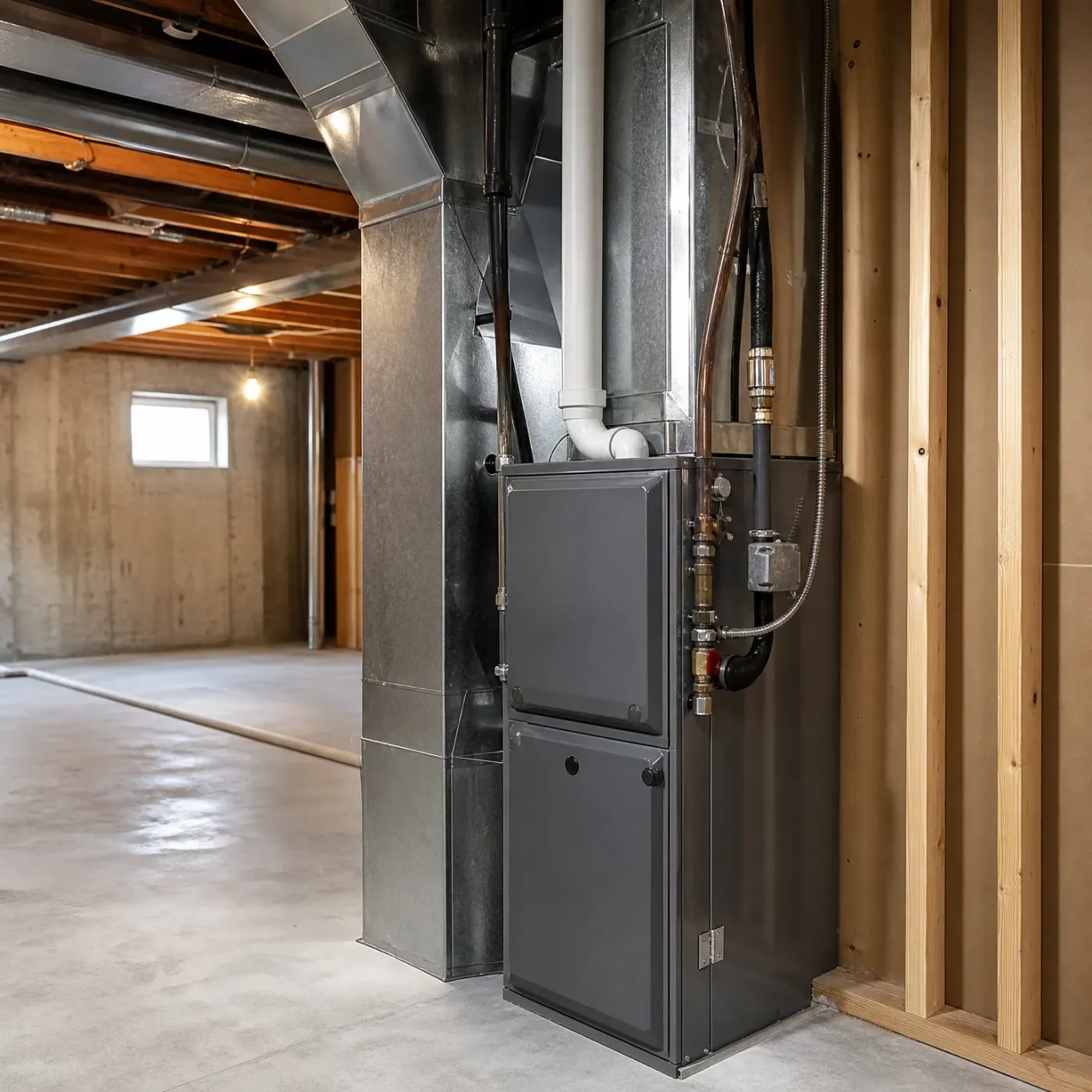
A gas furnace that smells like oil usually points to the burner compartment. Dust and debris burning off on first startup gives off an odor close to oil or kerosene, and it fades within a few minutes once everything's burned clean. If the smell lingers past that, or shows up every time the furnace cycles, something in the burner assembly needs a closer look.

Oil-fired furnaces are different
If your furnace actually burns oil, a faint smell at startup is normal since the burner is igniting fuel oil directly. A strong or constant odor is not. That usually means unburned oil is leaking somewhere in the line or the nozzle isn't atomizing fuel the way it should, and either one needs a technician to trace down before it gets worse.
Oil Smell: Oil Furnace vs. Gas Furnace
Oil-fired furnace
- An oil smell right after the burner fires and shuts off is normal, since the burner doesn't burn every drop cleanly on startup and shutdown.
- A smell that lingers well past startup, or shows up mid-cycle, points to a dirty nozzle or a burner that needs adjustment.
- Soot around the furnace or a stronger smell near the chimney connector can mean a draft problem or a cracked heat exchanger.
- A fuel smell near the tank or the line running to the furnace usually means a loose fitting or a slow leak, not the burner itself.
- Oil furnaces need the nozzle and burner serviced on a schedule, so a smell that keeps coming back often means that service is overdue.
Gas furnace
- Gas furnaces don't burn oil, so a smell like it usually comes from dust or manufacturing oil burning off the heat exchanger on an early startup.
- That burnoff smell should fade within a few minutes and shouldn't come back once the furnace has run a few cycles.
- An oily smell that keeps showing up every time the furnace runs points to something actually leaking oil inside the cabinet, like the blower motor bearing.
- A smell closer to rotten eggs, not oil, means gas, and that's a different problem that needs attention right away.
- Soot or a dark residue near the burner on a gas furnace usually means it's not burning cleanly and needs a look.

Thermostat calls for heat and the burner motor starts
Oil sprays through the nozzle and mixes with air
Igniter sets the oil spray burning in the chamber
Flame heats the heat exchanger as exhaust vents outside


Done looking for a furnace pro
Describe your furnace job once, to one pro.
After you send the request, you're done searching.
No fee to send it, and nothing to sign.



It's 2 a.m. and you're awake for no reason you can name. The hallway floor is cold under your feet. You stand by the vent and hear nothing, no air moving at all. Frost has crept across the bottom corner of the window at the end of the hall, and the light coming through it is thin and blue. You press a hand to the vent cover anyway, just to check, and it's as cold as the floor. Somewhere below you the furnace sits quiet, and you're already thinking about how many hours until morning, and whether anyone can come before your pipes have to sit through another night like this one.

What this means for your house this winter
If the smell shows up once and fades, you can probably keep an eye on it through the rest of the heating months. If it keeps coming back, or the soot shows up near the vents again, that's oil getting into air you're breathing in rooms where your family sleeps and spends the evening. A nozzle that's not burning clean also means the furnace is working harder to put out the same heat, and with what power costs in Massachusetts, that shows up on the bill before it shows up anywhere else.
You don't have to spend an evening calling oil furnace companies, waiting on callbacks, and repeating what you smelled to three different people before someone can even look at it. Send the form once and that search is off your plate. Someone licensed to work on oil furnaces gets the details and takes it from there, and you go back to watching for the smell instead of chasing down who can fix it.

Winter nights average 21°F statewide
Winter nights here average 21°F, and your furnace is going to run long stretches to keep up on nights that cold. That's more cycles where leftover oil can burn off, so an odor that clears fast now is worth tracking if it starts lingering later in the season.
NOAA nClimDiv 1991-2020 county normals weighted by homes
A quick oil smell when the burner starts is normal. One that lingers, comes back mid-cycle, or shows up with soot near the vents means something in the burner needs a look, a dirty nozzle, bad ignition, or a crack worth catching before January's cold snaps push the furnace harder. You already know enough to tell the difference now, and you don't have to figure out what to do about it alone. Instead of calling around to find a furnace technician, explaining the smell and when it happens to three different companies, then sitting with quotes trying to guess who's worth hiring, you send one form. From there, finding someone to look at it isn't on your plate anymore. That's one less thing to track down while you're already watching a vent for soot and listening for how long the burner runs on a cold night.





It's off your list after this
Fill out one short form instead of calling around.
Sending the form costs nothing.