A gray high-efficiency furnace with two white PVC vent pipes stands beside galvanized sheet-metal ductwork in a dim basement with exposed joists and a concrete floor.

No phone calls to make

Do you need a furnace humidifier in Massachusetts

Winters here run dry with the furnace on, and that's the real question behind this one: whether a whole-home humidifier is worth adding to your system, and what it takes to get one installed right. This page gets into that, and skips the part where you'd have to track down a contractor, explain your setup more than once, and sort through quotes yourself.

Fill out one form

Most homes in Massachusetts need one. A furnace pulls in cold outside air and heats it, and heating air without adding moisture back drops the humidity inside your house well below what's comfortable, often under 30 percent once it's cold enough outside that the furnace is running most of the day. You'll notice it as dry skin, static shocks off the doorknob, a scratchy throat in the morning, maybe cracks showing up in wood floors or trim. A whole-home humidifier ties into your ductwork and adds moisture back as the furnace runs, so the air moving through your house stays closer to the 35 to 45 percent range that actually feels comfortable and doesn't dry out your house's woodwork or your sinuses. If winters where you live mean the furnace runs for months at a stretch, that dry air isn't a one-off annoyance, it's the condition inside your house for most of the winter.

A gray furnace with white PVC vent pipes stands beside sheet-metal ductwork in a basement with a smooth concrete floor, exposed wood framing, and plastic sheeting on the walls.
With a humidifier running, the furnace heats the air and the system puts moisture back in at the same time, so the air at the vents isn't bone dry.
A beige furnace with two access panels stands against a concrete basement wall, with galvanized sheet-metal ductwork, a white PVC pipe, flexible conduit and insulated ducting around it.
Without one, the furnace keeps drying the air all winter, and you'll notice it in cracked skin, static shocks, and wood floors and trim pulling apart at the seams.

How a Furnace Humidifier Works

  • A bypass humidifier taps warm air from your supply duct and routes it through a water panel before sending it back to the return.
  • A fan-powered unit uses its own small blower to push air through that panel, which moves more moisture into drier houses.
  • A saturated water panel, also called the pad, is what actually evaporates the water into the airstream as it passes through.
  • The unit connects to a float valve supplied by a copper or plastic line off a nearby water pipe, so it never needs manual filling.
  • A humidistat near the thermostat reads indoor humidity and opens the water valve only when the furnace blower is running.
  • The drain line carries off the mineral deposits left behind as water evaporates, which is why the panel needs swapping out most years.

A whole-home humidifier mounts right on your ductwork, near the furnace, and ties into the system's airflow instead of sitting out in a room. The two common types are bypass and fan-powered. A bypass unit uses the furnace's own blower to push warm supply air through a water panel and back into the return side, so it only works while the furnace is already running. A fan-powered unit has its own small blower built in, which moves more air through the panel and puts out more moisture, something a drier house or a larger duct system often needs. Either way, the water panel is the part doing the work. Water trickles over it, the warm air passing through picks up moisture, and that air carries it out to the rest of the house through the ducts. A float valve, fed by a small line off a nearby water pipe, keeps the panel wet without anyone filling a tank. A humidistat mounted near the thermostat checks the indoor humidity and opens that valve only when the blower is moving air, so it's not running the line dry when the furnace is off. Minerals in the water don't evaporate with it. They build up on the panel instead, and a drain line carries off what it can, but the panel itself still needs replacing most years once it's loaded with deposits.

A gas furnace with a louvered upper panel stands on a concrete pad in a basement, flanked by sheet-metal ductwork, white PVC and metal pipes, and insulated columns.
Before you get your furnace installation
A dark high-efficiency furnace on a concrete pad in a basement, connected to galvanized ductwork, white PVC vent pipes, and copper and black gas piping, with concrete walls and wood framing nearby.
After you get your furnace installation

Run your furnace all winter without any moisture added back and the air inside settles well below what's comfortable. You'll feel it first in your skin and sinuses, worse by January than it was in November. Then it starts showing up in the house itself. Wood floors and trim lose moisture to the air and shrink, so by February you're looking at gaps that weren't there in October. Any wood furniture, cabinetry or instruments in the house are exposed to the same thing, and the joints can crack or pull apart if the air stays dry for weeks on end. Touch a doorknob or a light switch and you'll get a shock sharp enough to notice, every time. Houseplants that need steady humidity don't do well in a house heated this way all winter. None of this is dramatic on any single day. It adds up over a Massachusetts winter, because the furnace runs most of the day from November through March, and every one of those hours is pulling moisture out of the air and everything in the room with it.

What dry winter air does to your house

  • Dry winter air pulls moisture out of wood floors and trim, and you'll see gaps open up in flooring and furniture joints by February.
  • Static shocks on doorknobs and light switches get sharp enough to notice every time you touch metal in your own house.
  • Dry sinuses and cracked skin get worse the longer your furnace runs, which in Massachusetts means most of the day from November through March.
  • Wood instruments, cabinetry and trim can crack or separate at the joints when indoor humidity sits below 30 percent for weeks at a stretch.
  • Keeping humidity in a normal range lets you feel comfortable at a lower thermostat setting, which matters with what electricity costs here.
  • Houseplants and anything that needs steady humidity struggle in a house where a furnace runs all winter with no moisture added back.
A smiling woman with dark shoulder-length hair in a cream V-neck sweater sits at a marble counter with a glass of red wine, with a kitchen and softly lit living room behind her.
A woman in a dark green sweater laughs while seated at a marble kitchen island with a glass of red wine, with open shelving, cabinets and a living room visible behind her.
A woman with long dark hair in a cream knit sweater laughs while looking off to the side, seated at a counter with a glass of red wine, in a dimly lit living room with a sofa, lamp, framed pictures and houseplant behind her.
A smiling woman with long dark hair in a beige sweater sits at a marble kitchen counter with a glass of red wine, with a dimly lit living room behind her.
A gray high-efficiency furnace with two white PVC vent pipes stands against sheet-metal ductwork in an unfinished basement with concrete floor and walls and exposed wood joists.

One form, no calling around

One installer gets your project, so there's no bidding war over it.

Skip the round of in-home estimates for a new furnace.

Skip the search

You only hire the pro if you want to.

How does a furnace humidifier actually control how much moisture it adds?

You've seen the parts named, bypass, fan-powered, steam, but not how any of them know when to stop adding water. You don't want a system that either does nothing or fogs up your windows. The control is the part that decides how much moisture actually ends up in your air, and it's worth knowing how that decision gets made.

A humidistat on the unit reads the air and tells it when to run

A humidistat wired to the humidifier or mounted on a nearby wall reads the humidity inside your house and opens or closes a small damper or valve to match a target you set, often lower on the coldest days and higher when it's milder outside, since cold air holds less moisture before it fogs your windows. The furnace blower has to be running for any of this to work, since bypass and fan-powered units depend on moving air to carry moisture off the water panel. Some installations tie the humidistat to the thermostat so it only calls for moisture while the furnace is actually heating, which keeps it from running against a cold, idle system.

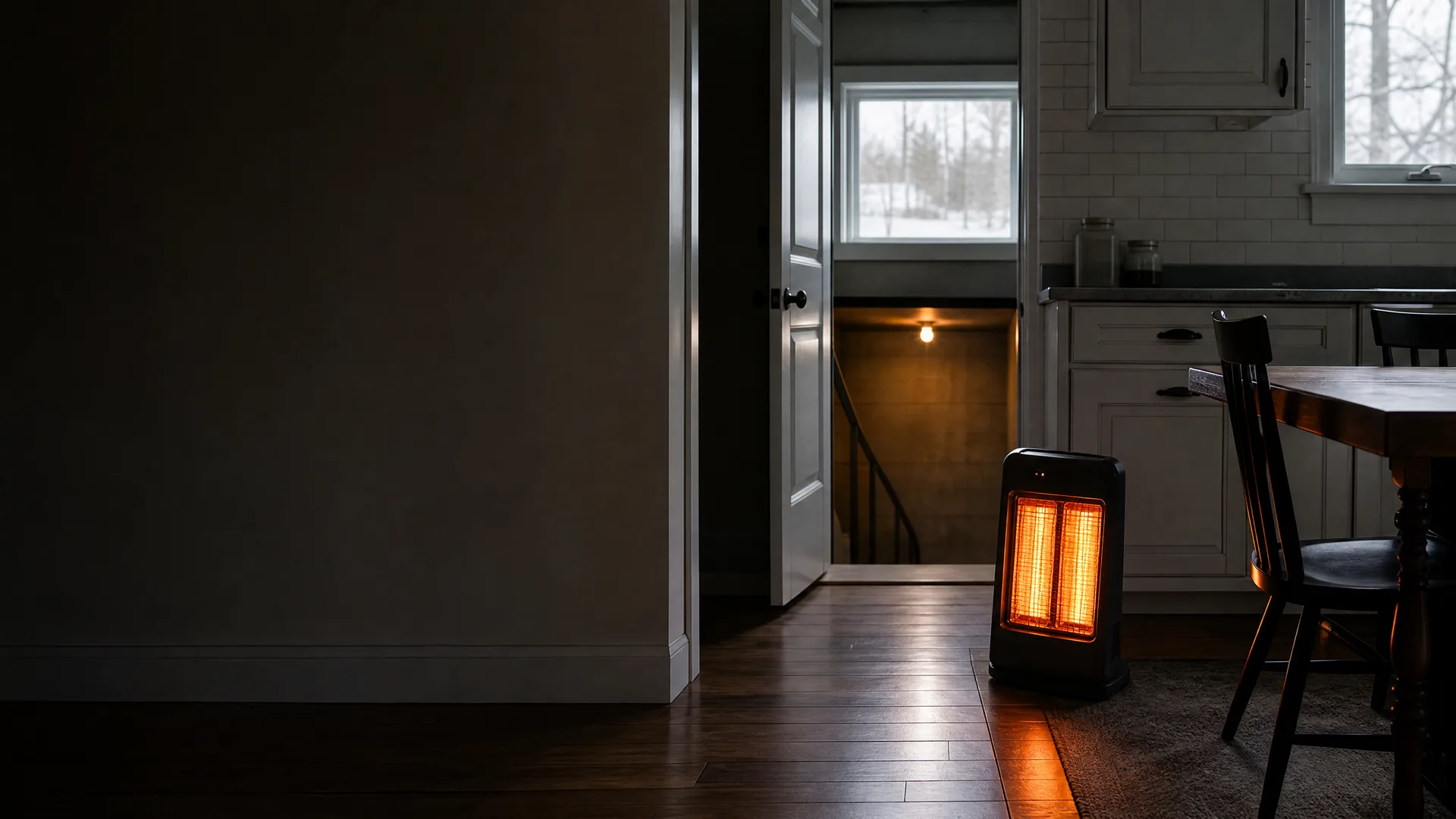
A portable electric space heater with glowing orange elements stands on a dark wood floor in a dim room beside an open door leading to a lit stairway, with a kitchen counter, window and wooden table and chairs at right.

It's just past six and still dark outside. You're at the kitchen table with coffee, and the little space heater is going by your chair because the room hasn't caught up yet. The basement door behind it is open a crack, the way it's been since you went down to check the humidifier panel last week. The furnace kicks on and you hear it, but the air coming up still feels thin somehow, dry enough that you notice it on your hands wrapped around the mug. Your daughter comes down in socks, crosses the kitchen fast, and says the floor by the stairs is cold again.


Winter nights average 21°F statewide

Nights this cold average 21°F across the state in deep winter, and that's the air your furnace is pulling in and heating all night long. Cold air like that holds almost no moisture to begin with, so once your furnace warms it, the humidity inside drops fast and stays low until morning.

NOAA nClimDiv 1991-2020 county normals weighted by homes

A beige high-efficiency furnace with white PVC vent pipes stands beside galvanized sheet-metal ductwork in a basement with a concrete floor, exposed wood studs, and metal piping along the wall.

A humidifier doing its job

This is a furnace running with a humidifier tied into the supply plenum, feeding the ductwork evenly. The air coming off that metal trunk carries moisture with it, so every room gets the same balance instead of just the rooms closest to the furnace.

An older beige furnace with a louvered vent panel stands on a concrete basement floor beside galvanized sheet-metal ductwork, a metal flue pipe and vertical pipes along a concrete wall.

A furnace working without one

This older furnace has nothing routing moisture into the ductwork, just the flue and the supply trunk. It heats the house fine, but every cubic foot of air going through that ductwork is drier than what came into the furnace. Nothing here changes that.

A smiling bearded man in a navy crewneck sweater sits at a dinner table with a glass of red wine, plates and glasses in the foreground, in a dimly lit room with a lamp and framed picture behind him.
A woman in a dark gray sweater reclines on a light sofa with eyes closed and a slight smile, under a textured gray blanket with an open book resting on her lap, with a lit table lamp and plant in the background.
Exterior wall of a building with light gray horizontal siding and a dark downspout running to the ground, with snow on the roofline, steps, and ground, and bare trees behind during falling snow.

The colder the air outside, the less water vapor it can hold, and 21°F is about what that air averages on a winter night here. Your furnace draws that air in and heats it, which spreads whatever little moisture it had across a much bigger volume of warm air. By morning you can feel it: skin tight after a shower, lips chapping, a shock every time you touch the stair railing. A humidifier tied into the ductwork puts water back into that same air before it reaches your rooms, so the furnace isn't just drying the house out faster the colder it gets outside.

NOAA nClimDiv 1991-2020 county normals weighted by homes

What are you noticing in your own house right now

Your lips are chapped by January and the lotion on your dresser gets used up faster than it used to. You wake up with a dry throat some mornings, or your nose feels raw. Touch the doorknob or the stair railing and you get a shock, every time, not just once in a while. Picture frames on the mantel have a thin gap at the corners that wasn't there in the fall. A guitar left in its stand goes out of tune in a week. If you've got hardwood floors, you can hear a few boards creak that stayed quiet all summer. None of this is damage yet, but wood that keeps drying out and shrinking season after season is wood that eventually cracks or pulls apart at the joints.

A gray high-efficiency furnace with two PVC vent pipes stands in an unfinished basement beside sheet-metal ductwork, a framed and plastic-covered wall, and a bare concrete wall with vertical pipes.

Furnace with humidifier installed

This is what a finished install looks like: the furnace tied into the ductwork, flue pipes run, gas line connected, and a humidifier working off that supply trunk out of sight. Nothing about the room changes. The only difference shows up in the air the vents put out.

A gray furnace cabinet in a basement, connected to galvanized sheet-metal ductwork and white PVC pipes, against a concrete wall with exposed metal piping and insulation overhead.

Furnace waiting on one

This furnace heats the house fine on its own. It's sitting on a pallet, ductwork and drain lines already run, ready for a contractor to tie a humidifier into that trunk line. Until that happens, every cubic foot of air it heats stays as dry as the cold air coming in.

A closed dark laptop and a ceramic mug of coffee on a wooden dining table, with wooden chairs, a dark kitchen cabinet with cutting boards and a potted plant, and a leafy plant by a window in the background.

So, do you need one

Most houses in Massachusetts heating with gas through the winter need a humidifier tied into that furnace. The dry air, the static, the cracked trim, that's what a cold-air furnace does to a house here, and a humidifier on the supply trunk is what fixes it for every room at once instead of one space heater and a jug of lotion.

Finding someone to put one in right is its own chore, the kind you'd normally handle by calling a few places, explaining the same thing about your furnace and your ductwork three times, and sitting with quotes trying to guess which one actually knows this equipment. Submit a request here and that part is done. You get matched with one licensed contractor local to Massachusetts, someone who works on furnaces like yours every winter and knows what a bypass or fan-powered setup needs in a house built the way houses are built around here. No pile of calls to sort through, just the one.

A gray upholstered sofa with a matching cushion sits beside a potted plant and a wooden table holding a small green plant in a stone pot, near a curtained window.
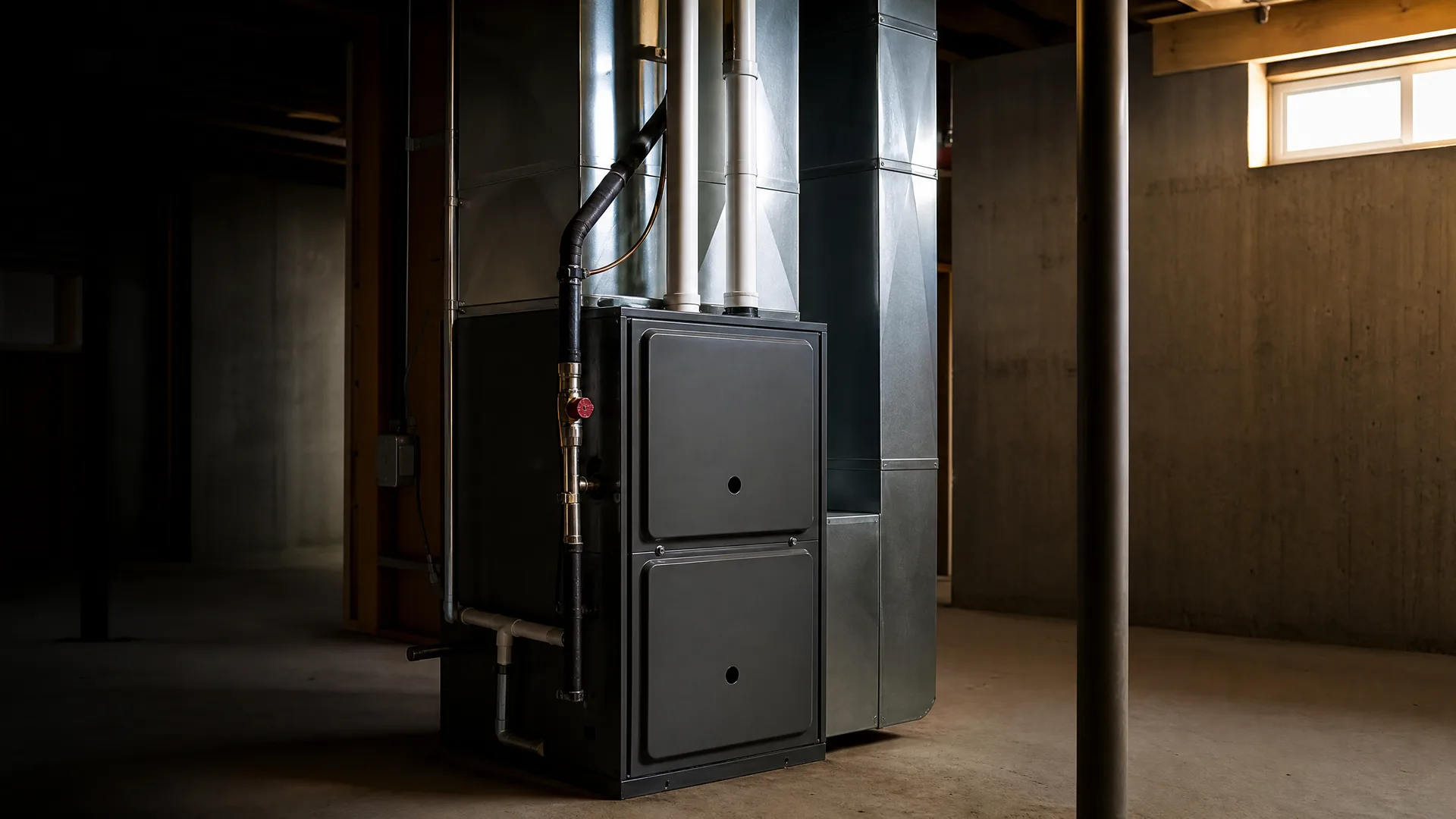
A dark gray high-efficiency furnace with two white vent pipes and connected sheet-metal ductwork stands in an unfinished basement with concrete walls, a support pole, and a small window.

Skip the search

New system or replacementFurnace or heatingMassachusetts
Step 1 of 2

What ZIP code is the job in?