
HVAC Installation in Lynn, MA
A new system here will heat from October through May and cool from July through August every year. Tell us about the house, and a licensed contractor who covers Essex County will get in touch.
Tell us about the job
It takes about a minute.

A system built for eight months of heat and two of cooling
Lynn asks a heating system to work most of the year. October through May, that is 8 months, the furnace or heat pump has to keep up with winter nights that average 21°F. A new system needs to be sized for that cold, not for a mild day in October.
Summer is short here, just July and August, with afternoons averaging 79°F. The same system that carries the winter load still has to cool the house well on those two months of warm afternoons. When you install new equipment, both jobs matter, even though one season is longer than the other.
- 8 months
- October through May, your system heats
- 2 months
- July through August, it cools
- 21°F
- the average winter night it heats against
- 79°F
- the average summer afternoon it cools against
NOAA nClimDiv, 1991–2020 normals
- When should I replace my HVAC system?
- Once your furnace or air conditioner is on its second or third repair in a couple years, replacement is usually the better move than keep fixing it. An older system also starts working harder just to keep up, even when nothing is visibly broken. Homes here lean on heat from October through May, so a furnace on its way out gets tested for eight months straight, not just a few cold snaps. If yours is struggling to keep rooms warm on the coldest nights, that's a sign to start looking at replacement before it fails outright.
- Should I replace my furnace and air conditioner at the same time?
- If both are old, replacing them together makes sense, but it isn't required. A furnace and AC installed years apart can still run fine side by side as long as each is sized and matched to work with the other. The main reason to do them together is timing. If both units are getting old at the same time, they're likely to fail within a year or two of each other anyway, so pairing the work avoids two separate installs. A contractor can look at the age and condition of each and tell you honestly whether waiting on one makes sense for your house.
- What happens during an HVAC installation?
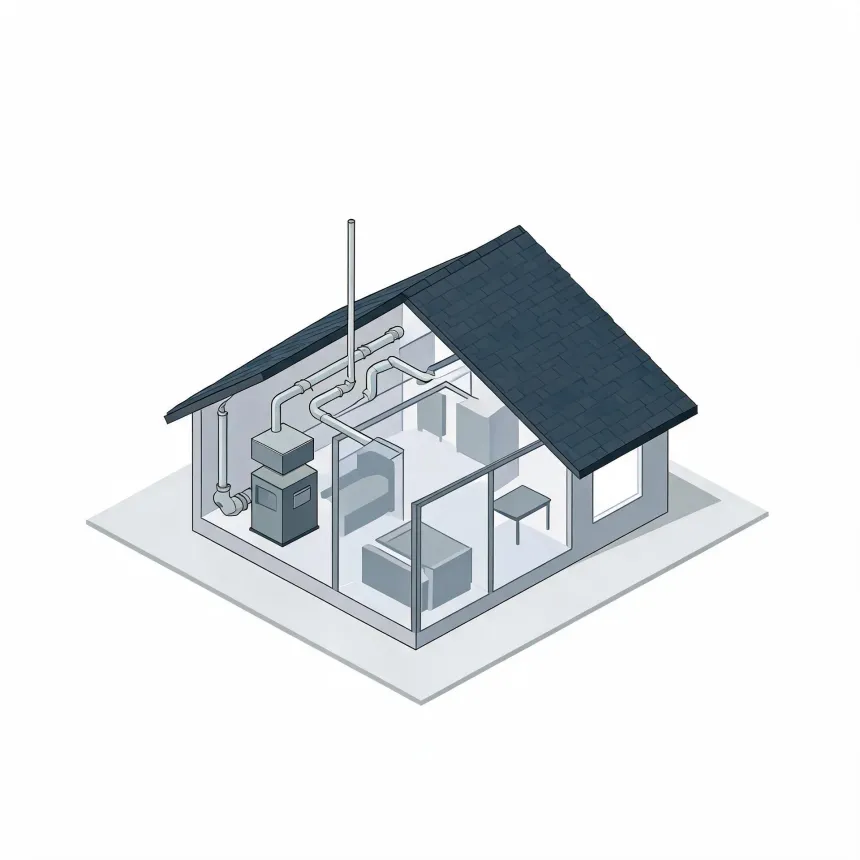
- The contractor removes the old equipment first, then sets the new furnace, air conditioner, or both in place and connects it to your ductwork, gas line or electrical circuit, and the vent hood or flue for exhaust. After that comes the wiring for the thermostat and controls, then a full test run to check airflow, temperature rise, and that the system cycles properly. For a gas furnace, the contractor also checks the venting and combustion to make sure exhaust is clearing the house correctly. A straightforward swap of like-for-like equipment goes faster than a job that needs new ductwork or an upgraded electrical circuit, so a contractor looking at your setup can tell you what your install actually involves.