

Clear and venting outside
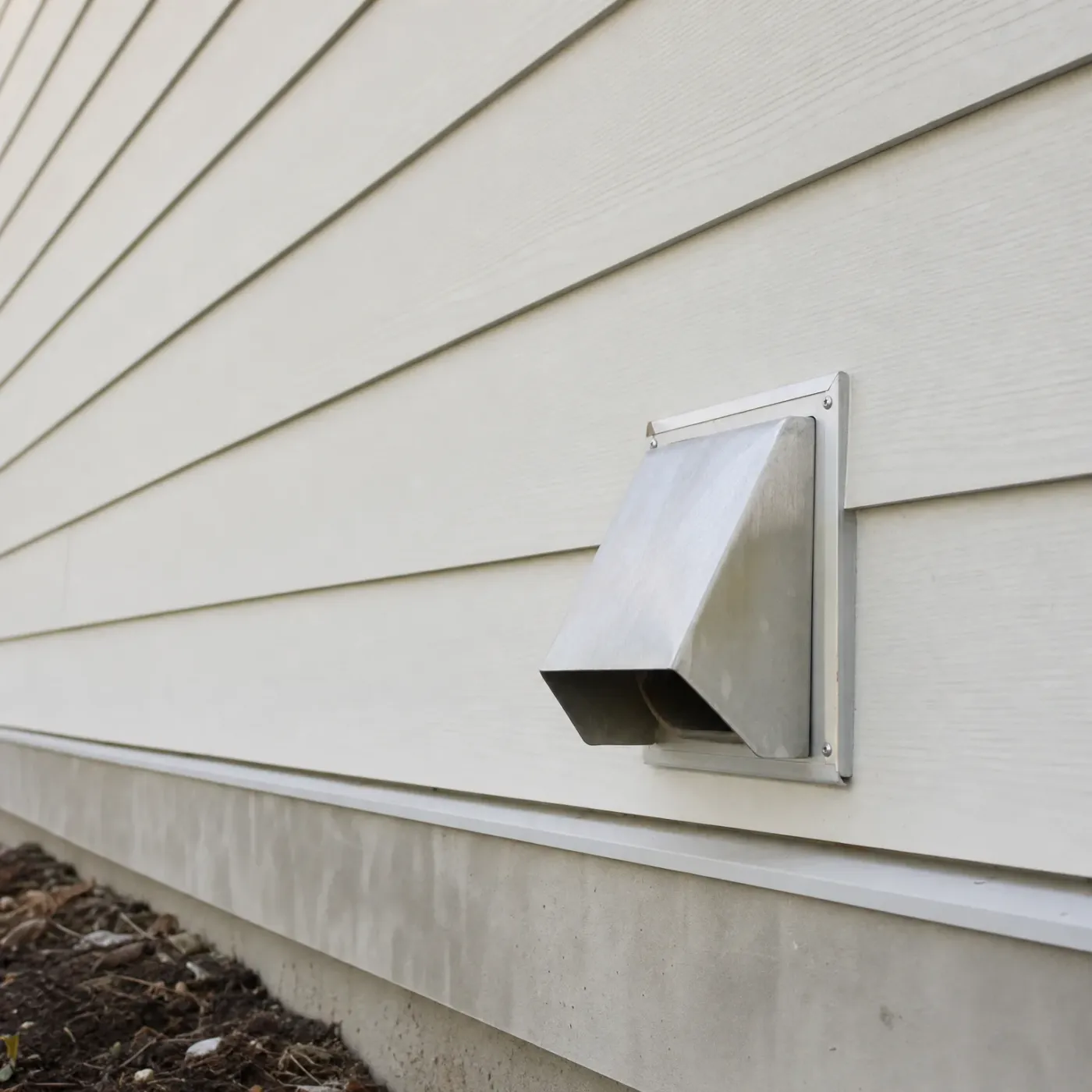
This is what a clear vent looks like. The flap opens when the dryer runs and closes when it stops, keeping outside air and pests from coming back in. Air and lint both pass through and out.
Your request goes to a Middlesex County pro who takes dryer vent jobs.
Get a dryer vent proYes. A clogged dryer vent is one of the more common causes of house fires, and it works the same way in Cambridge as anywhere else. Lint builds up inside the vent duct until air can't move through it. The dryer keeps heating, but the hot, damp air has nowhere to go, so it backs up into the machine and the lint around the drum and heating element gets hotter than it should. Lint catches fire easily and burns fast. You'll usually notice warning signs first: clothes that take two or three cycles to dry, the outside vent flap barely moving when the dryer runs, or the laundry room feeling warmer and more humid than usual. If your vent hasn't been cleaned in a while, or you're not sure when it last was, that's worth checking before it turns into something worse.

Lint is dry, fine, and sits right where the heating element pushes hot air through the duct. When the vent is clear, that air keeps moving outside and carries the lint with it. When it's clogged, the air slows down and the heat has nowhere to go. It builds up against a pile of lint sitting inches from the element. That's the combination that starts a fire: a heat source and dry fuel with no airflow between them.

A load that used to take forty minutes and now takes twice that is the clearest sign. Clothes coming out hot to the touch at the end of a cycle, instead of warm, is another. Check the outside vent hood while the dryer runs. If you don't feel much air coming out, or the flap barely moves, the duct between the dryer and the hood is likely packed with lint.
That's usually the first thing you notice, not smoke or smell. A load that used to take forty minutes now takes an hour and a half, or it comes out damp and you run it again. The top of the dryer feels hot to the touch. The laundry room feels warmer and more humid than it should, especially with a door closed. You might catch a faint burning smell when it's running, or notice the outside vent hood barely moves air when you hold your hand near it. Any one of these means air isn't getting out the way it should, and heat that should be leaving your house is building up inside the duct instead, next to a wall full of lint.

It's past eight on a Tuesday and you're still in the laundry room. This is the third run for the same load. You open the door and the towels on top are warm but not dry, so you pile them on the dryer lid and start it again, the way you have most nights this week. The air in the room feels heavier than it should for March. You notice the house still smells faintly warm, like the dryer's been on for hours, because it has. You don't think about the vent. You think about the towels, and whether this load will be the one that finally comes out dry.

This is what a clear vent looks like. The flap opens when the dryer runs and closes when it stops, keeping outside air and pests from coming back in. Air and lint both pass through and out.

Here the openings are packed with dust and lint, and the flap can't sit right anymore. Air is forcing its way through what's left of the gap, and most of what the dryer pushes out is staying in the duct instead.




Your request goes to one pro, not a list of companies.
Get matched with someone who does this kind of work in Middlesex County.
It costs nothing to send, and you don't have to hire anyone.
2.49 people per household on average
Middlesex County households run 2.49 people on average, which means more loads a week and more lint moving through the same duct between cleanings.
Half the homes here were built by 1962
Half the homes in Middlesex County were built in 1962 or earlier. If yours is one, check how long the vent run has been there.
Power here costs 31.00 cents per kilowatt-hour
Electricity here runs 31.00 cents per kilowatt-hour. A clogged vent forces the dryer to run longer per load, and that shows up on the bill.
ACS 2020-2024 · EIA-861 2025
Lint collects along the inside wall of the vent duct
Airflow narrows and the dryer takes longer to push air out
Heat has nowhere to go and builds up inside the duct
Trapped lint ignites against the dryer's heating element


The thermal fuse is supposed to be the backstop. It cuts power when the exhaust air runs too hot, but by the time it trips, lint has already been piling up for a while. Near the heating element, where that lint collects, the air is hot enough to set it off, since lint catches far easier than the cotton or paper it came from. It's been shredded into thin, dry fibers with a lot of surface exposed, so it burns faster than you'd expect. The high-limit thermostat takes the brunt of this too. A clogged duct makes it cycle on and off more than it should, and that wear adds up over time. Most of the buildup happens in the last few feet of duct, right before the exterior hood, where the air cools enough for moisture and lint to drop out together. If your home still has the coiled plastic or foil duct that shows up in some older Cambridge basements, a fire moves through it faster than it would through rigid metal.




You can go out and look at the vent hood while the dryer runs. If the flap barely moves or the air coming out feels weak, that tells you something is wrong right now. A lot of people never do this because the dryer still turns on and still gets warm, so there's no obvious reason to check. The duct can be packed most of its length and the dryer will keep running the same way it always has, just slower. Looking costs you nothing but a few minutes outside.
Plenty of people live with the longer dry times for months because the dryer still works and nothing has caught fire yet. That's a real option, and most loads do finish eventually, just not in one cycle. The other option is having the duct cleaned before it gets worse, since a contractor who works on these in Cambridge every week knows where lint tends to pack hardest in this area's vent runs. One path keeps costing you time on laundry day. The other clears the duct and the time problem along with it.
With close to three people in most Middlesex County households, laundry here runs often, not once a week. More people means more loads, more lint moving into that duct, and less time between cleanings before it builds back up.
ACS 2020-2024
A clogged dryer vent is a real fire risk, in Cambridge the same as anywhere else, and the signs show up before the danger does. Long dry times, a warm dryer top, weak air at the hood: that's the duct telling you it can't move air the way it should. None of that fixes itself. Lint keeps packing in, the dryer keeps working harder to push air through, and the margin between a slow dryer and a genuine hazard keeps shrinking.
A cleaning clears the duct out so the dryer can do what it was built to do, send hot, damp air outside in one steady push instead of fighting its way through a narrowed pipe. That's the whole job. It doesn't take a new dryer or a change in how you do laundry, just someone opening up the vent and taking the lint out of it.
The contractor you'd get matched with works on vents like this all year, in homes around Cambridge and the rest of Middlesex County, and knows the spots where lint tends to pack tightest in houses like yours. You're matched with one licensed local contractor, not several companies calling at once trying to win the job.
If you want to know where you stand before you do anything else, go look at the vent hood while the dryer's running. A flap that barely moves or air that feels weak is your answer. If that's what you find, this is worth scheduling for.

Get matched with a dryer vent pro in Middlesex County