
HVAC Repair in Quincy, MA
Homes here need heat from October through May and cooling from July through August. If your system quits, tell us what it's doing and a licensed contractor who covers Norfolk County will get in touch.
Tell us about the job
It takes about a minute.

Ten months of work a year, winters that stay below freezing
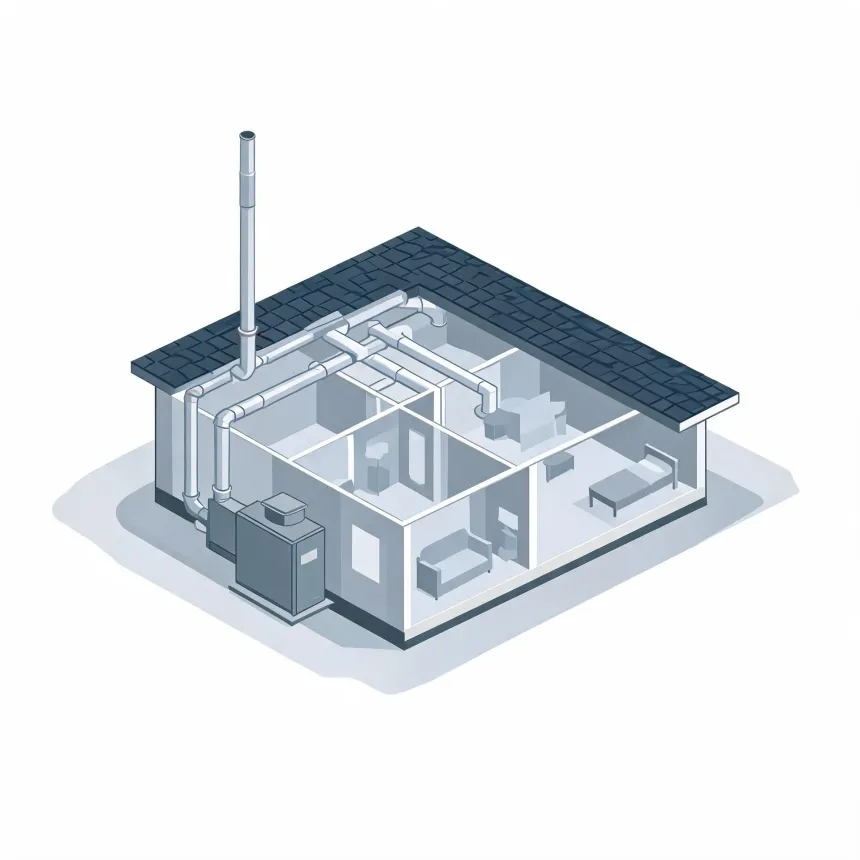
Your furnace or heat pump runs from October through May here, then the AC takes over for July and August. That is ten months where something in the system has to work every day.
Winter nights average 21°F, so the burner or compressor is cycling on and off for hours to keep up. That kind of run time wears on an igniter before its time, and you notice it as a system that takes longer to catch or won't light at all. Norfolk County has also logged 87 winter storms and 462 damaging wind events over the past ten years. When the power goes out, most furnaces and heat pumps come back on by themselves once it returns. If yours does not, that is worth a look.
- 8 months
- October through May, your system heats
- 2 months
- July through August, it cools
- 21°F
- the average winter night it heats against
- 81°F
- the average summer afternoon it cools against
NOAA nClimDiv, 1991–2020 normals
A new furnace and air conditioner would cut about $220 a year off heating and cooling for a typical Norfolk County home.
Estimates for a typical Norfolk County home, compared with an older unit built to the previous federal minimum, from EIA household energy data, Massachusetts fuel prices and NOAA climate normals. Your home will differ.
Repair makes sense when one part has failed.
Replacement makes sense when the furnace's heat exchanger is cracked, the air conditioner's compressor has failed, or repairs keep coming.
- Why is my heat not working?
- Start with the thermostat. Make sure it's set to heat and the temperature is set above the room temperature, since a setting bumped a degree or two can look like a dead system. Check your breaker panel next, since a tripped breaker will shut a furnace down with no warning. If the thermostat has batteries, swap them. If none of that explains it, the igniter or the flame sensor is a common failure point on a gas furnace, and that's a job for a contractor. With winter nights here averaging 21°F, it's worth getting this looked at quickly rather than waiting it out.
- Why is my system running but not cooling the house?
- Check the air filter first. A filter clogged with dust blocks airflow across the coil, and the system will run without bringing the temperature down. Check that all your supply vents are open and not blocked by furniture or rugs. If the filter is clean and the vents are clear, the refrigerant charge or the outdoor unit could be the problem, and that needs a contractor's gauges to diagnose. Summer afternoons here run around 81°F, so a system that can't keep pace usually has a specific fault rather than just being overworked.
- What can I check before calling for HVAC repair?
- Check the thermostat settings and batteries first. A thermostat set to the wrong mode or with dead batteries causes more no-heat and no-cool calls than people expect. Check the breaker panel for a tripped breaker, and check the air filter, since a filter packed with dust chokes off airflow to a furnace or an air conditioner alike. Look at any outdoor unit for leaves, ice, or debris blocking it. If you've checked these and the system still isn't working right, a contractor will need to look at the parts inside the cabinet, and having already ruled out the simple causes saves time on that visit.